A magnetic wireless charger pad is a flat charging pad with a ring of magnets built in, so a compatible phone snaps into place and lines up with the charging coil instead of drifting off it. That is magnetic wireless charger pads explained in one sentence: a pad that stays plugged into a wall while your phone supplies the battery. Here is the rest, without the marketing language.
The magnet does not charge anything. It positions the phone so the transfer actually works, which sounds small until you have spent a year putting a phone down on a plain pad, picking it up two minutes later and finding it hadn’t charged at all.
Table of Contents
- What Are Magnetic Wireless Charger Pads?
- How Magnetic Wireless Charger Pads Work
- What Phone and Charger Compatibility Means
- Why Alignment Matters for Charging Speed
- Why does charging stop when the phone is nudged?
- How Much Power Do Magnetic Charging Pads Provide?
- Magnetic Charging Pad vs. Wireless Charger vs. Power Bank
- Do Magnetic Wireless Chargers Generate More Heat?
- How to Choose the Right Magnetic Charging Pad
- Magnetic wireless charger pads explained: specifications that actually matter
- Frequently Asked Questions
- Are magnetic wireless charger pads safe for phones?
- Can a magnetic wireless charger charge through a phone case?
- Do magnetic charging pads need a wall adapter?
- Will a magnetic pad work with any wireless-charging phone?
- Why does my magnetic wireless charger stop charging when I move the phone?
- Are magnetic wireless charger pads faster than regular wireless chargers?
- Conclusion
What Are Magnetic Wireless Charger Pads?
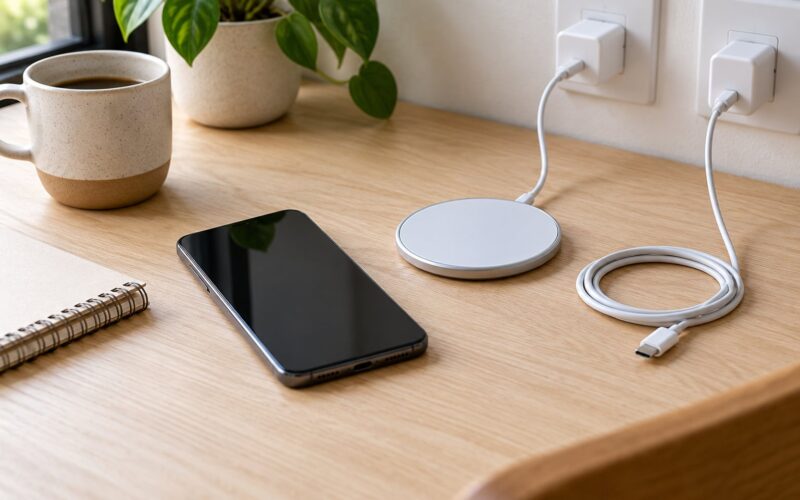
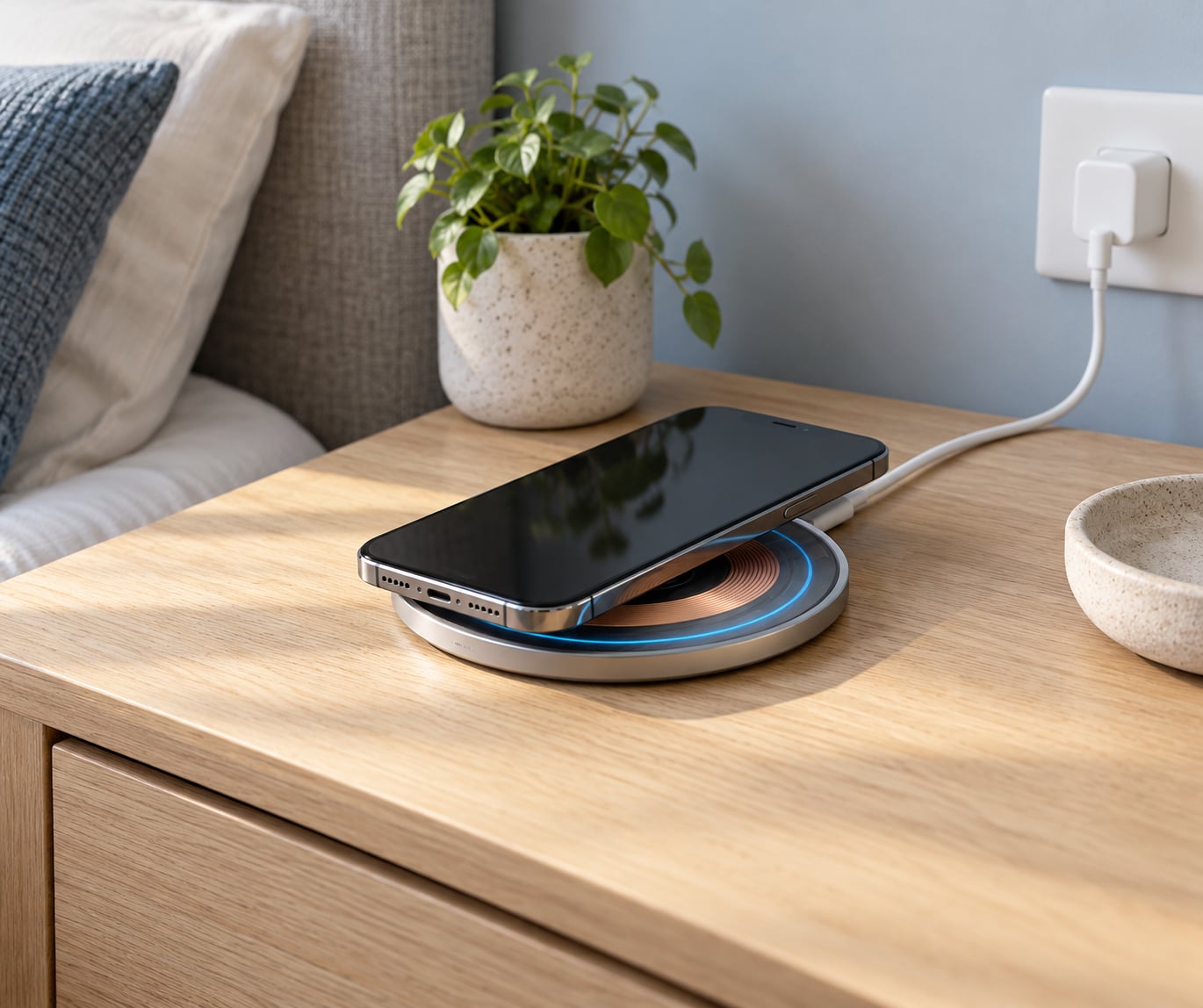
A magnetic charging pad has three parts: a coil that sends power out, a ring of magnets that holds your phone in position, and a cable that feeds it from a wall adapter. The pad stays where it is. Nothing is stored inside it, which is the main difference from a magnetic power bank.
A magnetic power bank carries its own battery and travels with you. A magnetic pad is furniture: it lives on a nightstand or a desk, and it needs a plug. Plenty of people buy both, and they solve different problems.
You will also see magnetic charging stands, which use the same ring and coil but hold the phone upright. The physics is identical. The difference is whether the phone sits flat or stands up while it charges.
How Magnetic Wireless Charger Pads Work
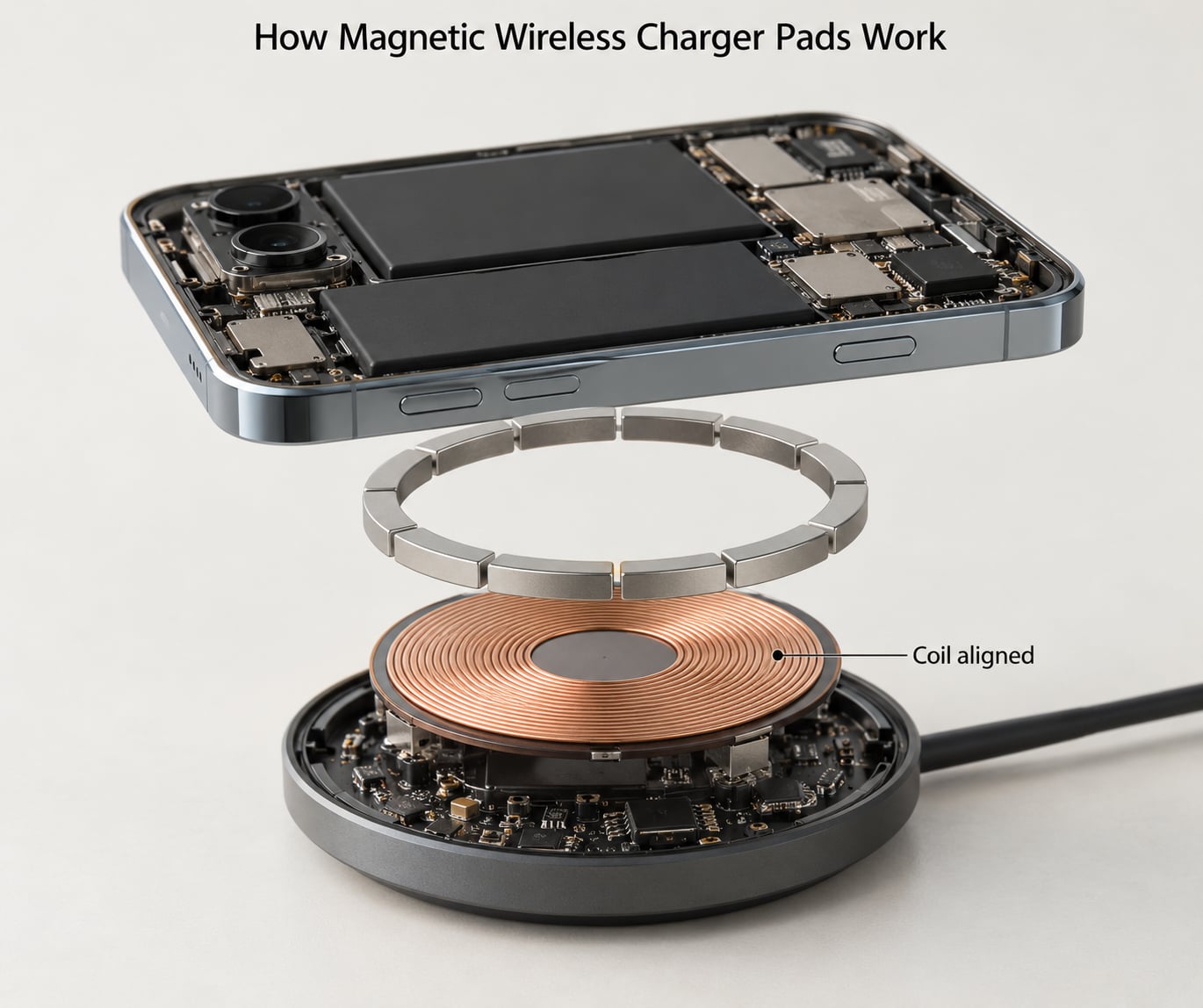
Wireless charging is inductive charging. Alternating current runs through a copper coil in the pad, that current creates an electromagnetic field, and a matching coil inside the phone picks up the field and turns it back into usable current. The magnets exist purely to hold the two coils directly above each other.
- Power reaches the pad. A wall adapter supplies power through the cable. Many pads accept a wide input range, but the adapter still decides how much the pad can give out.
- The transmitter coil makes a field. Alternating current in the pad’s coil produces an electromagnetic field that extends a few millimetres above the surface.
- The phone negotiates. A phone with wireless charging support sends a signal back. The two sides agree on a charging power level before anything is transferred. This handshake is why a pad will not charge a device that has no receiver coil.
- The magnets line things up. The magnet ring pulls the phone’s coil directly over the pad’s coil. Good alignment means the field hits the receiver squarely instead of partly missing it.
- The battery charges. The receiver coil converts the field into direct current, the phone charges its battery, and the pad manages heat while it happens.
Wireless charging is not lossless. Modern chargers convert roughly 70% to 90% of the input into battery power, and the remainder becomes heat in the pad, the phone or both. Alignment is the main lever you control.
What Phone and Charger Compatibility Means
Compatibility has two halves, and people constantly confuse them. Your phone must support wireless charging, and it must also have something to align with the pad’s magnets. A phone can pass the first test and fail the second, and that is exactly why a charger working on one phone does not guarantee magnetic alignment on another.
| Standard | Who sets it | Magnets | Top wireless speed | Phones it targets |
|---|---|---|---|---|
| Qi | Wireless Power Consortium | No | 5W to 15W depending on profile | Anything with a receiver coil |
| Qi2 | Wireless Power Consortium | Yes, based on the Magnetic Power Profile | 15W | Magnetically equipped iPhones and Android phones |
| Qi2 25W | Wireless Power Consortium | Yes, newer revision | 25W | Newer flagships that support the higher tier |
| MagSafe | Apple | Yes, built into iPhone 12 and newer | Up to 25W on the latest models | iPhone 12 and newer |
| Qi2 Ready | Wireless Power Consortium | Not built in, supplied by a case | 15W when paired with the right case | Qi2 Ready Android phones |
Qi2 took the idea behind Apple’s MagSafe ring and turned it into an open standard run by the Wireless Power Consortium. That matters for anyone buying an Android phone, because Qi2 is the route to magnetic charging on hardware that does not ship with magnets.
Qi2 Ready is the compromise: the phone has no magnets of its own, but a certified magnetic case supplies them. A user on r/samsung put it plainly about the Galaxy S25 — magnetic charging means buying a case first, which is a step the phone’s own spec sheet never mentions.
Two other terms trip people up. Qi2 certified means the product is on the WPC certified list. Qi2 compatible is a marketing phrase that means the seller hopes it works. Users on discussions.apple.com and the vwidtalk forums reported intermittent charging on pads advertised as Qi2, which is the practical reason to check the WPC certification mark before buying.
Cases change the answer too. A thin case with a magnet ring or an embedded metal plate usually charges fine. A wallet case with card slots, a metal plate in the wrong place, or a case several millimetres thick can either weaken the grip or move the phone’s coil out of position.
Why Alignment Matters for Charging Speed
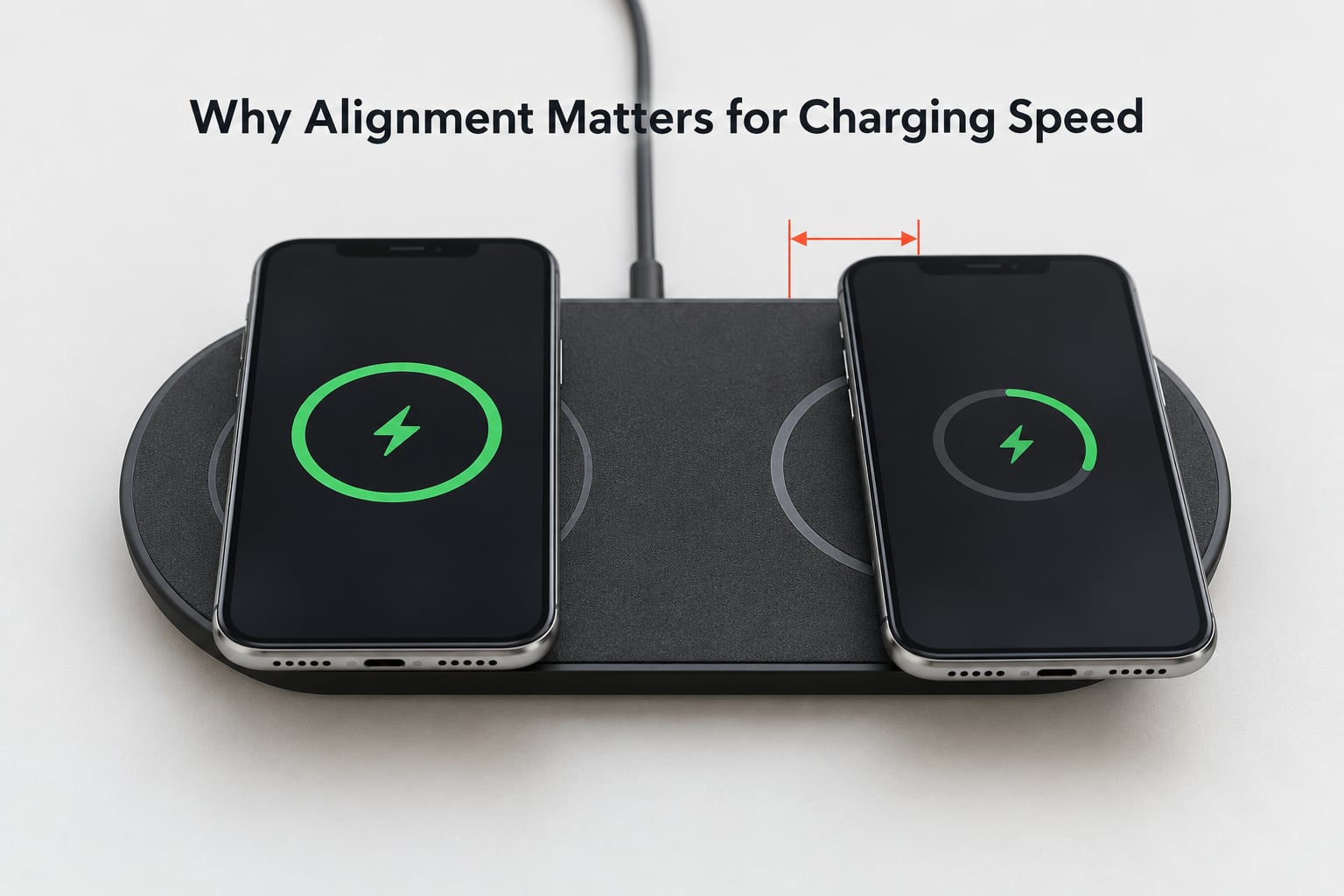
Alignment is everything in wireless charging. Move the receiver coil a few millimetres off the transmitter coil and less of the field reaches it, so more of the power becomes heat and less becomes battery charge. Push the offset far enough and charging simply stops.
This is the complaint that shows up in every forum thread about plain pads. A user on r/GalaxyS22 described trying several chargers that all seemed to need the phone aligned perfectly before they would do anything. In a car mount the same problem is worse: a driver on the Prologue forums reported the charger barely holding a charge because the phone moves with every bump.
Magnets solve it mechanically. The ring pulls the phone into position and keeps it there against gravity, vibration and a careless elbow, which is why charging on a magnetic pad feels steadier than the same pad without magnets.
Why does charging stop when the phone is nudged?
Three things can happen when the phone shifts. If the coils move out of range, the handshake fails and charging stops. If a metal object slides between pad and phone, foreign object detection cuts power to protect it. If the pad heats up, thermal throttling drops the charging rate until things cool.
A pad with no magnets gets the first failure constantly. A magnetic pad gets it far less often, which is the whole argument for buying one.
How Much Power Do Magnetic Charging Pads Provide?
Advertised wattage is not the number your phone receives. Three separate figures matter: what the wall adapter sends into the pad, what the pad can deliver wirelessly, and what your phone will actually accept. All three have to line up.
| Tier | Typical output | What you need to see it |
|---|---|---|
| Basic Qi | 5W | Any phone with wireless charging and a basic adapter |
| Fast Qi | 7.5W to 10W | A phone and pad that both support the higher profile |
| Qi2 / MagSafe | 15W | A magnet-equipped phone, a magnetic pad, and a USB-C Power Delivery adapter |
| Qi2 25W | 25W | A 25W pad, a phone that accepts 25W, and a 30W or higher PD adapter |
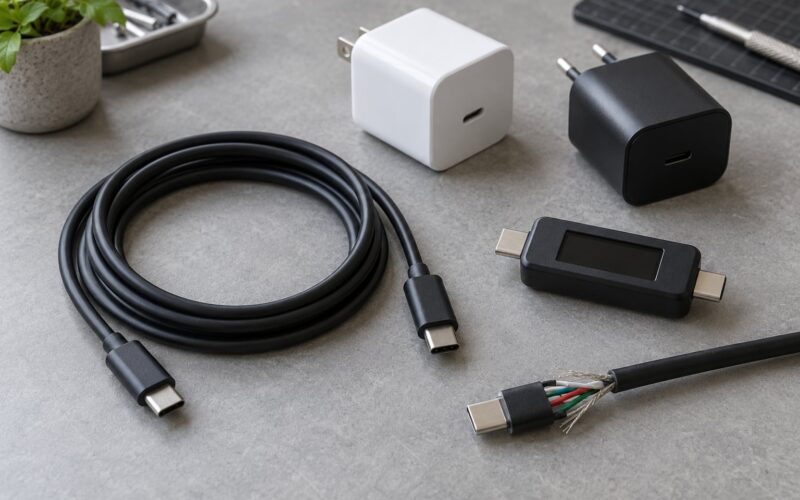
The 25W tier is where buyers get disappointed. A pad can be rated at 25W and still deliver roughly 15W if the adapter in the box is a low-output wall plug, because the pad can never send more than it receives. An adapter sold separately is not an accessory here; it is part of the speed chain.
Even with everything correct, the phone matters. Charging slows as the battery fills, stops entirely at full, and slows again if the phone gets warm, which is common in a warm room or under a pillow. A phone that tops out at 15W will never draw 25W no matter how capable the pad is.
Cable charging still wins on raw speed. A decent USB-C cable can push 20W or more without any alignment at all, which is why the fast chargers in r/MagSafe threads tend to be for people whose charging port is worn and who want to stop using it.
Magnetic Charging Pad vs. Wireless Charger vs. Power Bank
The three formats get mixed up constantly, and they are not interchangeable. Pick by where the power comes from and how much you move around.
| Magnetic pad | Plain wireless pad | Magnetic power bank | |
|---|---|---|---|
| Power source | Wall adapter and cable | Wall adapter and cable | Built-in battery |
| Alignment | Magnetic ring, very forgiving | Manual, must sit centred | Magnetic ring, very forgiving |
| Cable needed | Yes, permanently | Yes, permanently | Only to recharge itself |
| Portability | None | None | High |
| Best for | Nightstand and desk charging | Occasional top-ups at a desk | Travel, events, outages |
| Main drawback | Bulk and a permanent cable | Constant alignment | Weight, and capacity to recharge |
A plain pad still makes sense if you set the phone down, walk away and never touch it again. Magnetic hardware earns its extra weight when the phone gets handled constantly, which is most desks and every car.
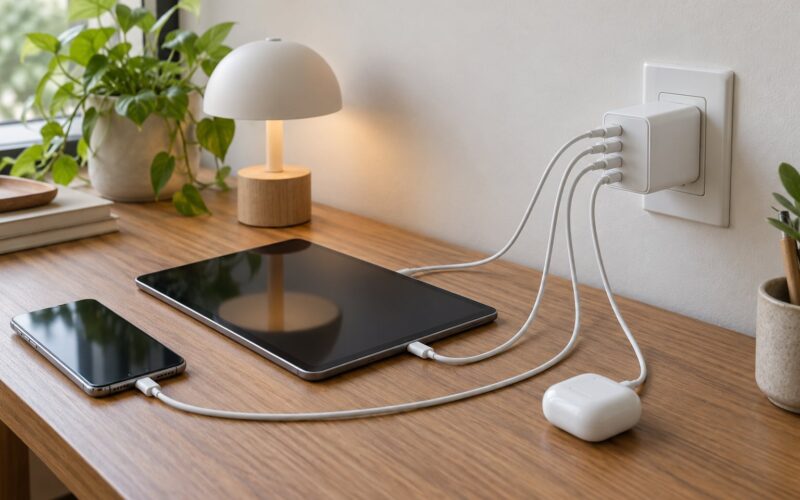
Users on r/phones described multi-device hubs as the form factor they like most, because one station replaces a phone charger, a watch charger and earbud case in a single spot. Those usually combine a magnetic phone position with standard Qi areas for everything else.
Do Magnetic Wireless Chargers Generate More Heat?
Yes, a magnetic pad can run warmer than a well-aligned conventional charger, but the magnet is not the cause. Heat comes from energy lost in transfer, and a misaligned or fast-charging setup loses more of it. A phone that is barely warm while charging at full speed is a good sign, not an odd one.
Things that raise temperature: leaving the case on when it is thick enough to push the coils apart, charging in direct sun or under bedding, charging two devices on one mat, and using uncertified pads with poor thermal management. Users on r/samsung reported third-party pads running warm after a couple of hours of charging earbuds.
Signs of a real problem are different from normal warmth. If the pad is too hot to rest a hand on for a second, if the phone shows a temperature warning and shuts charging down, or if the phone gets uncomfortably hot well before the battery is full, stop using it. Some phones will also force-close apps when they get too warm, which is a hardware protection kicking in rather than a glitch.
Leaving a phone on a certified pad overnight is normal use. The pad draws power, the phone stops at 100%, and both sit at low draw. Buy from a maker that publishes thermal behaviour, keep the surface clear, and skip cheap uncertified pads in a car seat or under a blanket.
How to Choose the Right Magnetic Charging Pad
Magnetic wireless charger pads explained: specifications that actually matter
Start with the phone, not the pad. If your device has no built-in magnet ring and is not Qi2 Ready, a magnetic pad is a paperweight unless you are also buying a magnetic case. Everything else is secondary.
- Charging standard. Look for the WPC Qi2 certification mark rather than the phrase Qi2 compatible. Certification is the difference between a known speed tier and a hopeful listing.
- Output wattage. Pick the tier your phone supports. Paying for headroom you cannot use adds nothing except a larger number on the box.
- Adapter details. Does one come in the box, and does it output enough power delivery for the advertised tier? This is the single most common reason a fast pad feels slow.
- Case compatibility. Check the maximum case thickness the maker supports, and whether a wallet case with cards is excluded.
- Cable routing. A permanently attached pad works best where the cable reaches cleanly. Thick desk mats are where built-in strain relief matters.
- Thermal design. A metal or glass top surface spreads heat better than bare plastic. Look for foreign object detection too.
- Form factor. Pad for a nightstand, stand for a desk where you watch calls, power bank for travel, hub if you also charge a watch and earbuds.
- Second device support. If you own more than one phone, a mat with a second Qi position saves desk space.
One last thing worth knowing: you can retrofit magnets onto a non-magnetic case. A thin steel ring or a magnetic plate sits between the case and the phone, and the pad then grips that instead. Buy a plate with a Qi2 Ready profile if you want the faster tier, and keep it thinner than your case wall.
Frequently Asked Questions
Are magnetic wireless charger pads safe for phones?
Yes, when the pad is certified and used as intended. The ring holds the phone in place rather than pressing on it, and charging stops once the battery reaches full. Keep the surface clear of metal objects and blankets, and use a certified pad if you plan to charge overnight.
Can a magnetic wireless charger charge through a phone case?
Usually, yes. Most cases are thin enough that the phone’s coil stays aligned with the pad’s, and a case with a built-in magnet ring works best. Thick cases, wallet cases with card slots, or a plate positioned badly can weaken the grip or stop charging. Check the maker’s stated case thickness.
Do magnetic charging pads need a wall adapter?
Most do, and many include a basic one. A pad cannot deliver more power than it receives, so a low-output adapter limits the charging tier even on a capable pad. To hit the top Qi2 speed you generally need a USB-C Power Delivery adapter rated at 30W or higher.
Will a magnetic pad work with any wireless-charging phone?
No. The phone needs both wireless charging support and something magnetic to align with. Phones without a built-in magnet ring, such as most Qi2 Ready Android models, need a magnetic case or a retrofit ring plate before they will attach properly.
Why does my magnetic wireless charger stop charging when I move the phone?
Moving the phone can break the link between the two coils, trip foreign object detection if metal slides between them, or trigger thermal throttling if the pad is warm. On a non-magnetic pad this happens constantly. Center the phone and let the magnets hold it to reduce it.
Are magnetic wireless charger pads faster than regular wireless chargers?
They can be, but the magnet is not what makes them fast. Magnetic pads make alignment consistent enough to reliably hit the faster Qi2 tiers, where a plain pad often settles at a slower profile. The final speed still depends on the pad rating, the wall adapter and what the phone accepts.
Conclusion
Three checks, in order. Confirm your phone supports wireless charging and has magnets, either built in or through a Qi2 Ready case. Then pick the charging standard your phone actually reaches and make sure the adapter supplies enough power for that tier. Finally, drop the phone on the centre of the pad and let the ring hold it there.
Magnetic wireless charger pads are not magic and they are not faster than a cable. What they do is remove the one daily annoyance that wireless charging never solved on its own, which is getting the phone to sit in the right spot. Get that right and everything else follows.