To clean a silicone watch band, detach it from the watch, wash it in lukewarm water with a small amount of mild dish soap, scrub the grooves with a soft-bristled toothbrush, rinse thoroughly, and let it air dry completely. The whole job takes about ten minutes and needs nothing more expensive than soap and water.
Silicone is a non-porous synthetic rubber, which is good news in one way and bad in another. Liquids bead up instead of soaking in, so grime stays on the surface where you can reach it. But sweat, skin oils, sunscreen and hand lotion keep building up in the same place every single day, and a band worn through a gym session holds all of it against your skin until it starts to smell.
Here is the routine, the odd jobs it also fixes, and the shortcuts that damage the material.
Table of Contents
- What You Need to Clean a Silicone Watch Band Safely
- Step-by-Step: How to Clean a Silicone Watch Band
- Remove the Band and Check the Watch
- Wash the Band with Mild Soap
- Use a Soft Brush for Dirt in Grooves
- Rinse, Dry, and Reattach the Band
- Common Mistakes and What to Do Instead
- How to Clean a Silicone Watch Band Without Ruining It
- How to Fix a Sticky, Lint-Covered or Discoloured Band
- How to Keep a Silicone Watch Band Clean Longer
- Frequently Asked Questions
- How do I clean a silicone watch band without damaging it?
- Can I use rubbing alcohol to clean my watch?
- Can you use Dawn dish soap to clean a watch?
- What is the best liquid to clean watch straps?
- How do I fix a smelly silicone watch band?
- Can I clean the band while it is still attached to the watch?
- Conclusion
What You Need to Clean a Silicone Watch Band Safely
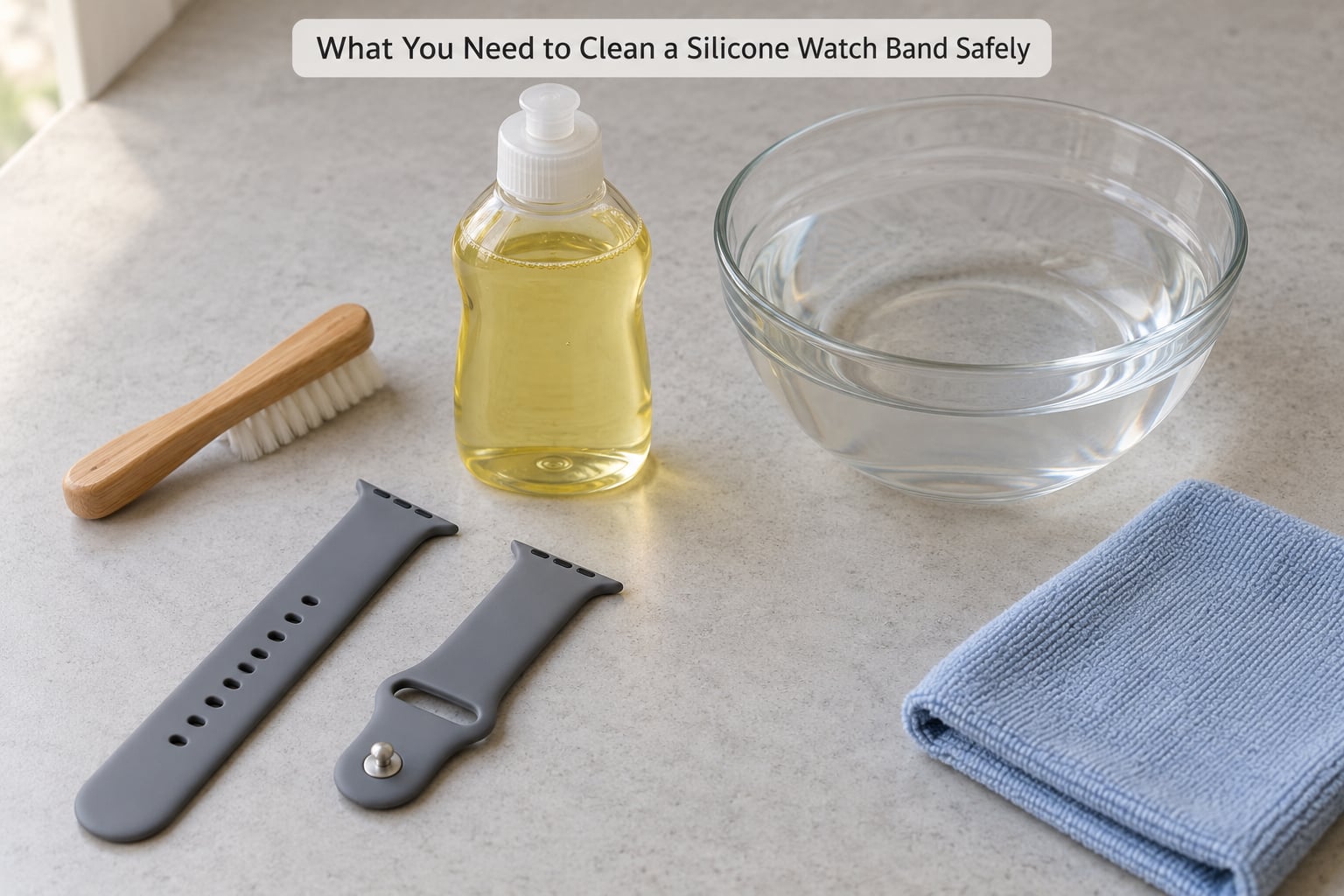
Five things cover almost every cleaning job:
- A shallow bowl or basin of lukewarm water
- A few drops of mild dish soap
- A soft-bristled toothbrush, ideally one you retired for the bathroom
- A clean microfiber cloth or lint-free cloth
- Baking soda for odour and stubborn marks
Before any of it goes near water, check the watch manufacturer’s care instructions. Some fitness watches and most smartwatches carry a water-resistance rating for the case and screen that says nothing about the band connectors, and getting water where it does not belong is the one mistake that ends in a repair bill.
For a routine wipe-down after a workout, warm water and soap are enough. A deeper clean with a soak and a brush earns its place once a month, or any time the band has been swimming in sweat, salt water or sunscreen.
Step-by-Step: How to Clean a Silicone Watch Band
Remove the Band and Check the Watch
Most bands use a quick-release connector or a pin-style spring bar. On a quick-release model, press the release button or lever on the underside of the lug and slide the strap out. On a pin-style band, push the spring bar sideways with a forked spring bar tool, a thin paperclip or the edge of a plastic card to compress one end and lift the band free.
Note which side sits against your skin while you remember it. Hold the strap itself rather than the buckle or the connector lugs when you pull, since that is where bands crack first. Then look at the holes and the underside: if there is green or grey growth in the holes or dark gunk packed against the connector, the brush step matters more than usual.
Wash the Band with Mild Soap
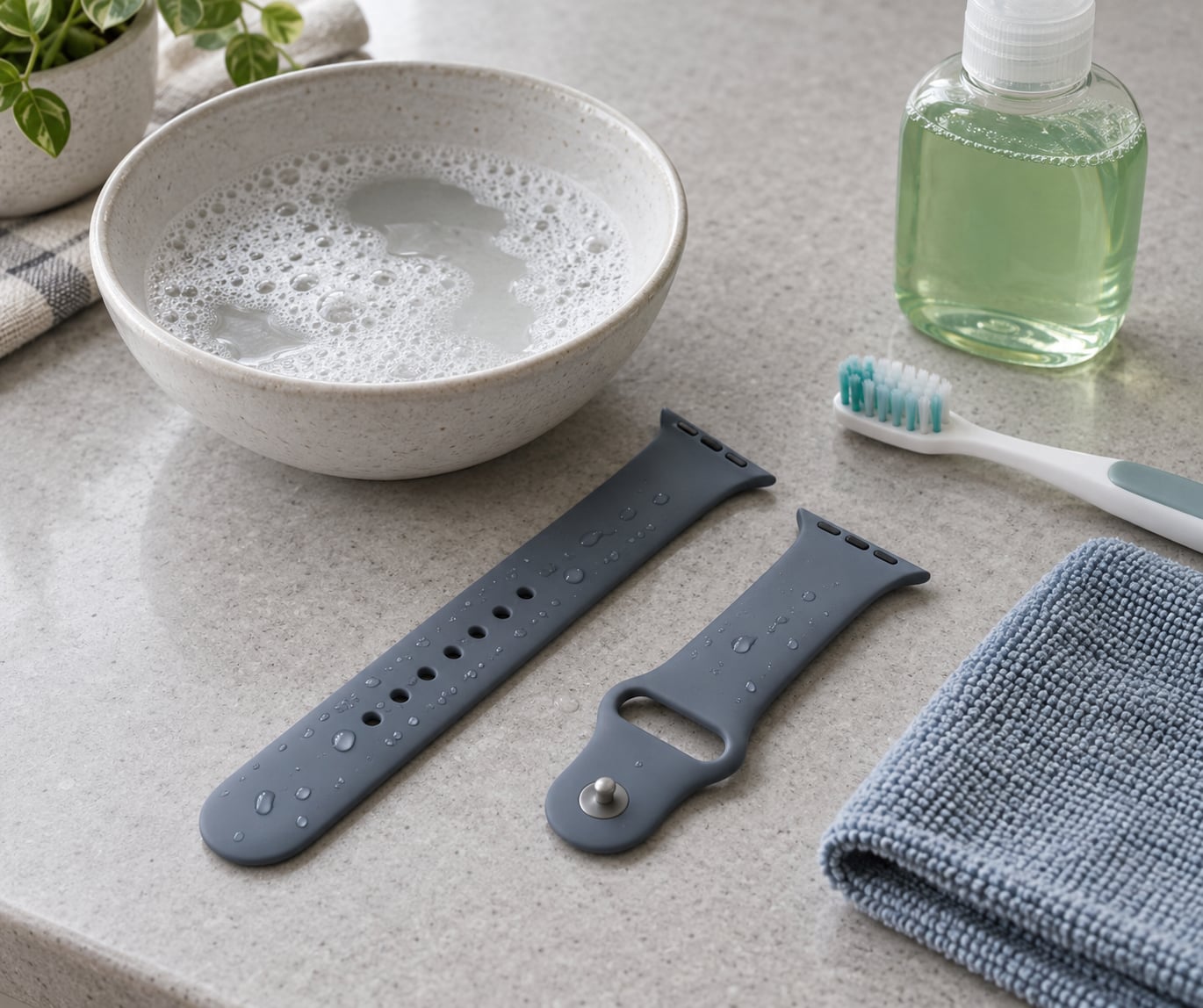
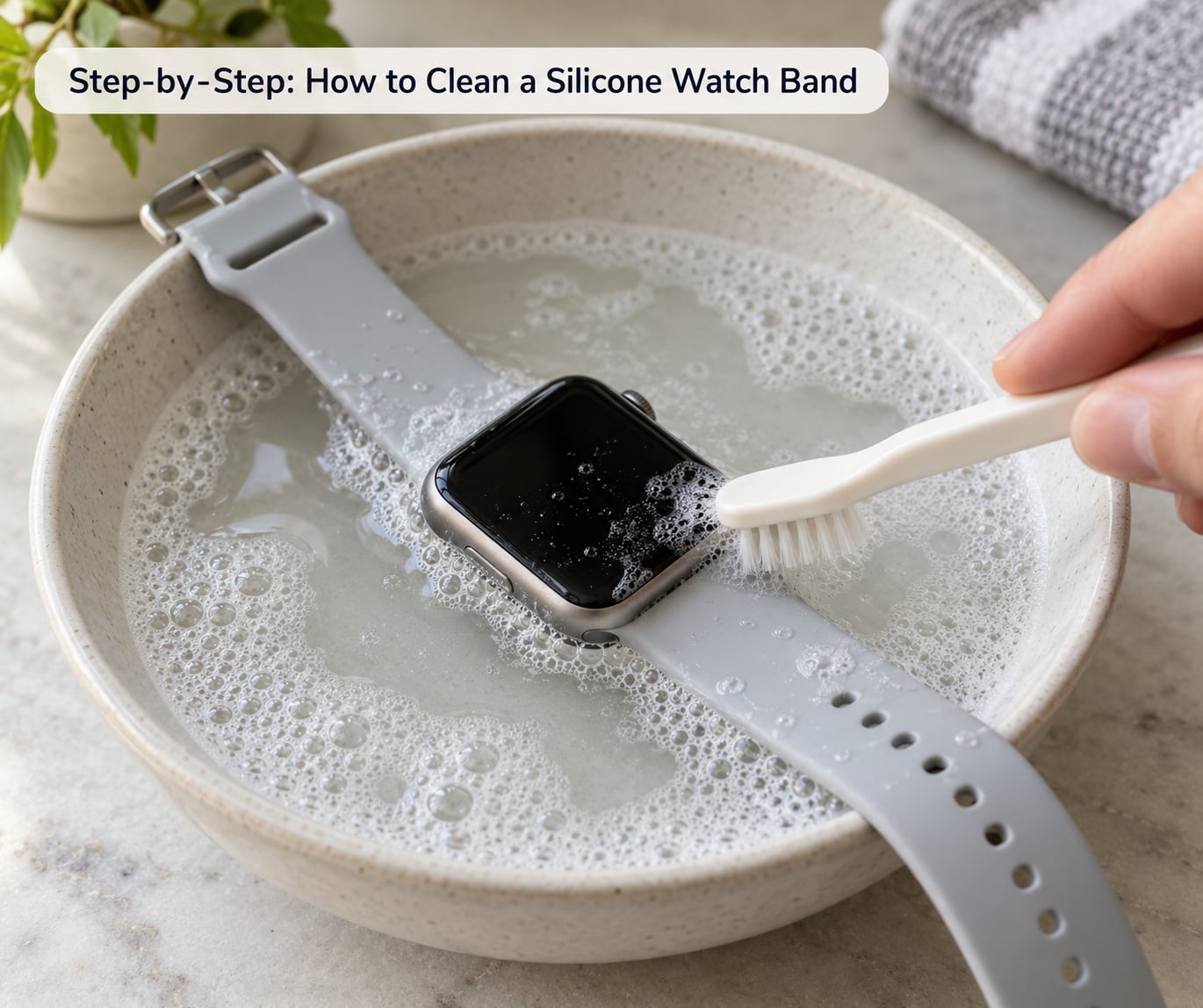
Fill the bowl with lukewarm, not hot, water and add a small drop of mild dish soap. Swish it until it clouds, then submerge the band and rub it between your palms for a minute. Soap emulsifies the oils that plain water leaves behind, and that is the whole reason dish soap beats a rinse under the tap.
Rinse your hands first if the band has been in the gym bag. Work the buckle holes and both ends through your fingers, and avoid dragging the strap across the sink edge, because that is the easiest way to scar the finish.
Use a Soft Brush for Dirt in Grooves
Move to the toothbrush with soft circular motions. The bristles get into the buckle holes, the pin channel, the textured underside and the seam where each half of the strap meets the watch case, which is where nearly all the visible grime hides.
Keep it gentle. Silicone wears away under abrasion, so a firm scrub leaves a matte patch that never comes back to match the rest of the band. Skip anything abrasive entirely: scouring pads, abrasive powders, and melamine magic erasers on the skin-contact side, which can leave a fine scratched surface that holds dirt faster than the original matte finish did.
Rinse, Dry, and Reattach the Band
Rinse the band under lukewarm running water until the water runs clear and no soap film is left. Squeeze out the excess between your fingers, pat it dry with the microfiber cloth, then hang it or lay it somewhere with air moving over it.
Give it a full hour before you wear it again. Silicone barely absorbs water, so it feels dry long before it actually is, and a band worn over damp skin is a band that smells by the afternoon. Once it feels room-temperature and dry all the way through, press the band back onto the spring bars until both ends click into the lugs, then tug gently to confirm it is seated.
Common Mistakes and What to Do Instead
How to Clean a Silicone Watch Band Without Ruining It
Most damage comes from one of these:
- Boiling or very hot water. It warps the band and softens spring bars. Use lukewarm and give it more time instead.
- Bleach and ammonia cleaners. They bleach the colour and dull the surface permanently. No amount of rinsing brings it back.
- Long soaks in alcohol or acetone. Nail polish remover will strip colour from a printed band and matte the finish. A quick isopropyl wipe for sticky residue is a different story, and plenty of owners use it that way.
- The dishwasher. The silicone survives; the buckle, spring bars and any steel hardware corrode and rust. That is the part you replace, not the strap.
- Hard scrubbing and scouring pads. A toothbrush does the same work without wearing the polymer down.
- Soaking the whole watch. The band is meant to get wet. The case, screen and connectors may not be, whatever the swimming rating suggests.
How to Fix a Sticky, Lint-Covered or Discoloured Band
When a silicone band goes tacky and starts attracting lint, dust and hair, the surface has broken down and is trapping everything that lands on it. Dampen a microfiber cloth with isopropyl alcohol and wipe the band down, then follow with a dry cloth to remove the residue. For the stickiness that stays, work a dry toothbrush across the band and rinse, then dry fully.
For a stubborn spot, mix baking soda with a little water into a paste, dab it on with a soft brush, leave it for five to ten minutes, then rinse. On white or light bands, that paste is gentler than most alternatives and usually lifts sweat marks and surface scuffs.
Yellowing on clear and white bands is mostly a one-way street. UV exposure and time oxidise the pigment, so baking soda and a vinegar rinse reduce the surface haze but rarely restore the original colour. If the yellow is deep and uneven, you are cleaning it rather than fixing it.
Odour gets its own routine. Soak the band in warm soapy water for 30 to 60 minutes, scrub it, then rinse and dry. If it comes back within days, repeat the soak with a spoon of baking soda in the water, or soak in a 1:1 mix of water and white vinegar for 30 minutes and rinse twice.
How to Keep a Silicone Watch Band Clean Longer
Rinse under the tap straight after a workout, while the sweat is still on the band. A quick soap-and-rub with wet fingers takes 30 seconds and removes most of what would otherwise set in overnight. Do the same after swimming, since salt and chlorine both leave residue behind.
Sunscreen and lotion need attention too. Wipe them off with a damp cloth before you fasten the band, because those films go tacky in heat and hold dirt fast. As a baseline, give the band a proper wash every couple of weeks, and a full brush-and-soak clean about once a month.
If the skin under your band turns red or itchy, the sweat and trapped bacteria are the usual cause, and the fix is more frequent cleaning and letting the area dry bare at night. A nickel buckle or a lining that has gone mouldy can also cause irritation, and no amount of cleaning solves either, so check those two when washing does not help.
Replace the band when cleaning cannot remove the smell, when the surface stays tacky after a wipe-down, when the strap has cracked around the pin holes or the lug, or when the hardware rusted. The band is cheap relative to the watch it sits on, and a band that is not clean will keep causing irritation no matter what you do to it.
Frequently Asked Questions
How do I clean a silicone watch band without damaging it?
Use lukewarm water, a small drop of mild dish soap and a soft-bristled toothbrush, then rinse and air dry for a full hour. What damages silicone is heat, chemicals and abrasion, not water. So avoid boiling water, bleach, long alcohol or acetone soaks, and scouring pads or magic erasers on the skin-contact surface, which scratch the matte finish permanently.
Can I use rubbing alcohol to clean my watch?
On the band, yes in moderation. A cloth lightly dampened with isopropyl alcohol works well on sticky residue and lint, and silicone is not harmed by it. Wipe again with a dry cloth so no alcohol stays on the surface, and never flood a soaked band. On the watch case and screen, alcohol can damage coatings, so follow the manufacturer’s care instructions for the watch body itself.
Can you use Dawn dish soap to clean a watch?
Dawn and other mild dish soaps are the right choice for the band, because soap emulsifies the skin oils that plain water leaves behind. Use only a small drop in lukewarm water, and scrub gently with a soft toothbrush. Keep the soapy water away from the watch case, screen and spring bar channel unless the manufacturer states the case is rated for it.
What is the best liquid to clean watch straps?
Lukewarm water with a small amount of mild dish soap is the best liquid for a silicone band, and it handles the large majority of jobs. For a stubborn smell, soak for 30 to 60 minutes in the same solution with a spoon of baking soda, or use a 1:1 mix of water and white vinegar for 30 minutes and rinse twice. Skip bleach, ammonia and acetone.
How do I fix a smelly silicone watch band?
Soak the detached band in warm soapy water for 30 to 60 minutes, scrub it with a soft toothbrush, rinse until the water runs clear, and let it air dry for a full hour before wearing. If the smell returns within days, the bacteria is deep in the texture, so repeat the soak with baking soda added. Washing the band in a washing machine and drying it with heat is the usual cause, not the cure.
Can I clean the band while it is still attached to the watch?
You can, for a light wipe-down, but taking the band off is better and takes seconds. The strap needs to soak, be brushed and be rinsed, and none of that works well in the gap next to the case. Wiping a band while attached also tends to push grime into the connector channel, which is the part that traps sweat. If you never detach it, dirt at the lugs will build up regardless.
Conclusion
Start by detaching the band, washing it by hand in lukewarm water with a small drop of mild dish soap, scrubbing the grooves with a soft toothbrush, rinsing until the water runs clear, and letting it dry fully for an hour before you put the watch back on. Ten minutes of that routine stops most smells, stickiness and skin irritation before they start.