If you only read one line: a robot vacuum runs your daily maintenance while you do something else, and a cordless stick vacuum gives you the suction, reach and control for deep cleaning, spills, stairs and upholstery. So the cordless stick vacuum vs robot vacuum question is not really a fight. On hard-floor homes, a good robot can take over most scheduled cleaning. Where carpet, pet hair or stairs are involved, the stick vacuum does the job no robot can touch.
This guide compares the two by cleaning performance, time and effort, battery and noise, cost of ownership, and household type, so you can pick the machine that solves your actual problem instead of the one with the longer feature list.
Table of Contents
- Cordless Stick Vacuum vs Robot Vacuum at a Glance
- A robot vacuum is a machine that maps your home and cleans on a schedule
- A cordless stick vacuum is a handheld motor with a wand and a floor head
- Cleaning Performance: Which Vacuum Removes More Dirt?
- A stick vacuum wins on deep carpet cleaning and pet hair
- A robot vacuum wins on consistency, not on raw power
- How Much Time and Effort Does Each Require?
- The stick vacuum costs you time; the robot costs you occasional maintenance
- Neither device is fully hands-off
- Battery Life, Noise, and Home Compatibility
- Stick battery runtime drops on exactly the jobs you bought it for
- Robot runtimes are long because the suction demand is modest
- Home layout decides more than specs do
- Which Is Cheaper to Own and Maintain?
- Count the consumables, not just the machine
- Cordless Stick Vacuum vs Robot Vacuum: Which Fits Your Lifestyle?
- Choose a robot vacuum if cleaning floors is not your problem
- Choose a cordless stick vacuum if you clean deeply or clean things that are not floors
- A room-by-room view makes the choice obvious
- Owning both is a common and defensible answer
- Frequently Asked Questions
- Which is better for me, a stick vacuum or a robot vacuum?
- What are the downsides of using a robotic vacuum cleaner?
- What are the downsides of a cordless vacuum?
- Is it really worth getting a robot vacuum?
- Is it worth getting a robot vacuum for pet hair?
- Can a robot vacuum replace a stick vacuum?
- Conclusion: Start With Your Cleaning Routine
Cordless Stick Vacuum vs Robot Vacuum at a Glance
| Criterion | Cordless stick vacuum | Robot vacuum |
|---|---|---|
| Cleaning type | Manual, operator-driven passes | Autonomous scheduled runs |
| Best for | Deep cleaning, spills, edges, stairs, car interiors | Daily maintenance on open hard floors |
| User effort | Your arms, every session | Press start, or run on a timer |
| Suction power | Typically quoted in air watts and pascals, often with a turbo mode | Lower sustained suction, tuned for light everyday debris |
| Deep carpet clean | The clear winner, with brush agitation and higher suction | Surface pass only on most models |
| Hard floors | Fast and thorough while you push it | Consistent coverage on a schedule |
| Mopping | Only on hybrid models with a mop attachment | Standard feature, often with pad washing and drying at the dock |
| Stairs and above floor | Yes, with a crevice tool or mini brush | No, cannot climb stairs at all |
| Upholstery and car | Yes, swap the head and go | No |
| Large spills | Handled immediately | Bounced around, often missed entirely |
| Navigation | You steer it | LiDAR, LDS or camera mapping with obstacle avoidance |
| Runtime | Often 40 to 60 minutes, less on max suction | Usually 90 to 180 minutes per run, recharges at the dock |
| Noise | Brief and loud while in use | Long and constant, noticeable at night |
| Maintenance | Empty bin, rinse filter, watch the battery | Empty bins or self-empty dock, cut hair off the brush roll, refill water, wash pads |
| Running cost over time | Filters, batteries, occasional accessories | Filters, dust bags, mop pads, side brushes, dock wear |
A robot vacuum is a machine that maps your home and cleans on a schedule
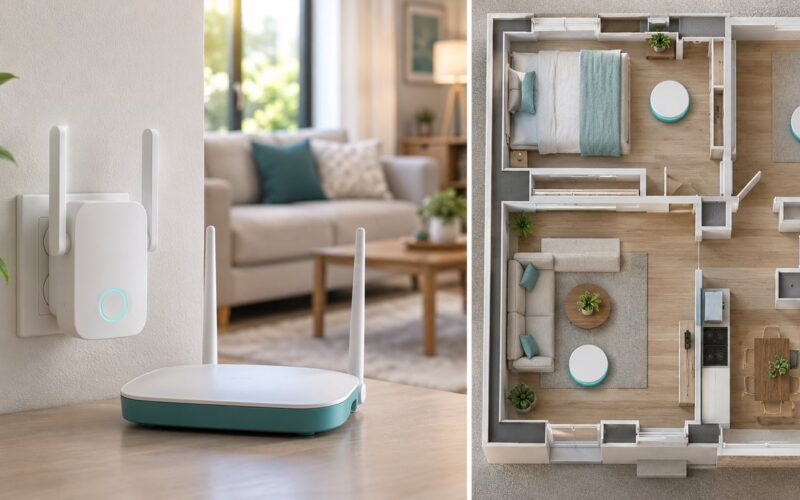
A robot vacuum drives itself around a floor plan. LiDAR, LDS or camera sensors combined with SLAM mapping build the map, room by room, and the machine returns to its base station to recharge. Many current models also empty their own bin, refill clean water, wash the mop pads and dry them with warm air, so your involvement drops to emptying a base station tank every week or two.
A cordless stick vacuum is a handheld motor with a wand and a floor head
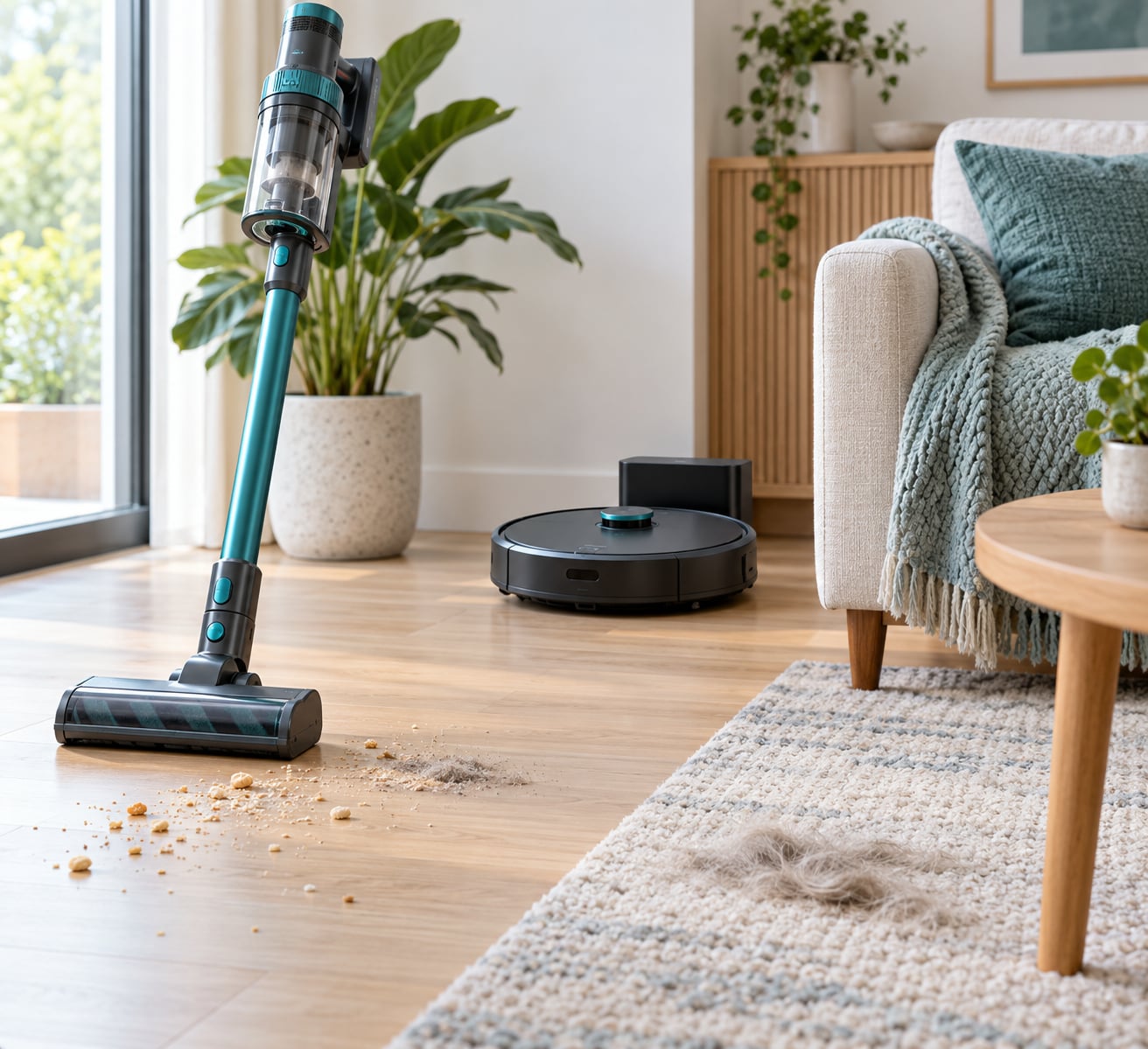
You push it. The motor and brush roll create suction, and you decide where it goes, how long it stays in one spot and which attachment to use. That is why it handles things a robot cannot: a pile of cereal, a stair tread, a car seat, the gap under a bed and the baseboard edge.
Cleaning Performance: Which Vacuum Removes More Dirt?
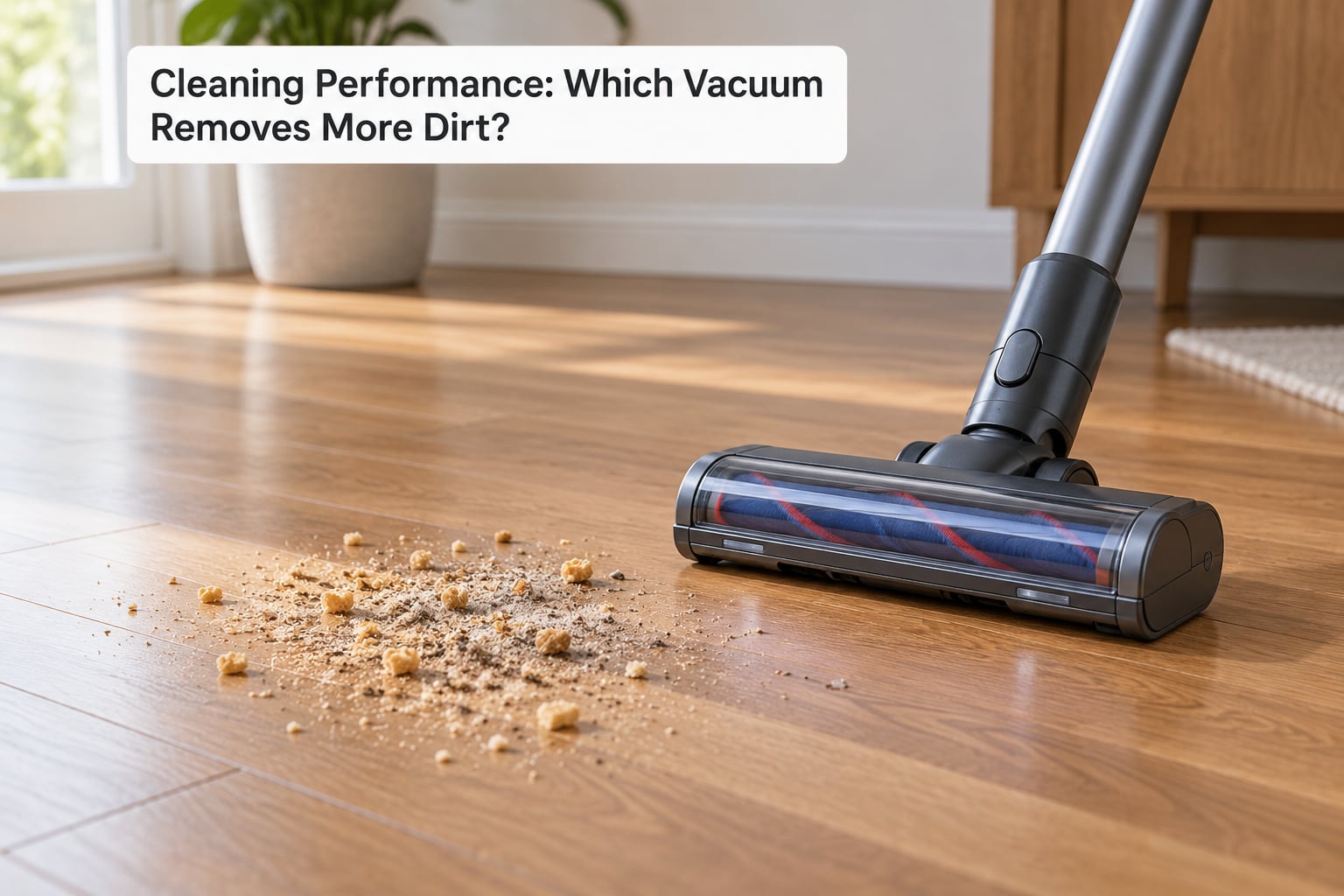
A stick vacuum wins on deep carpet cleaning and pet hair
Stick vacuums publish higher suction figures because their motors are sized for a short, intense burst rather than a long gentle run. Buyers also compare air watts, which capture how much air the motor moves, against pascals, which measure pressure at the nozzle. Air watts are the more honest number because pascals can be inflated by a narrow nozzle. Higher figures, plus a powered brush roll that agitates fibers, mean embedded hair gets lifted rather than just walked over.
On high-pile carpet and area rugs, the difference is not subtle. A robot glides across the surface and picks up what sits on top; a stick vacuum works the pile. If your carpet is the problem you are trying to solve, buy the stick vacuum.
A robot vacuum wins on consistency, not on raw power
A robot will run the same route three times a week without you deciding anything. That habit is the real advantage, because most visible floor dust comes from a slow accumulation, not from one big spill. Forum threads on r/VacuumCleaners repeatedly describe the same long-term pattern: the robot handles the floors, the stick vacuum becomes the tool for edges, stairs, upholstery and quick spills.
Robot vacuums also mop, which no plain stick vacuum does unless you buy a hybrid. Combined sweep-and-mop cycles with pad washing at the dock handle kitchen smears and dusty hard floors well. Just check your floor care guide before letting a robot wet-clean unsealed wood, and expect damp patches if the water tank stays in during mopping.
How Much Time and Effort Does Each Require?
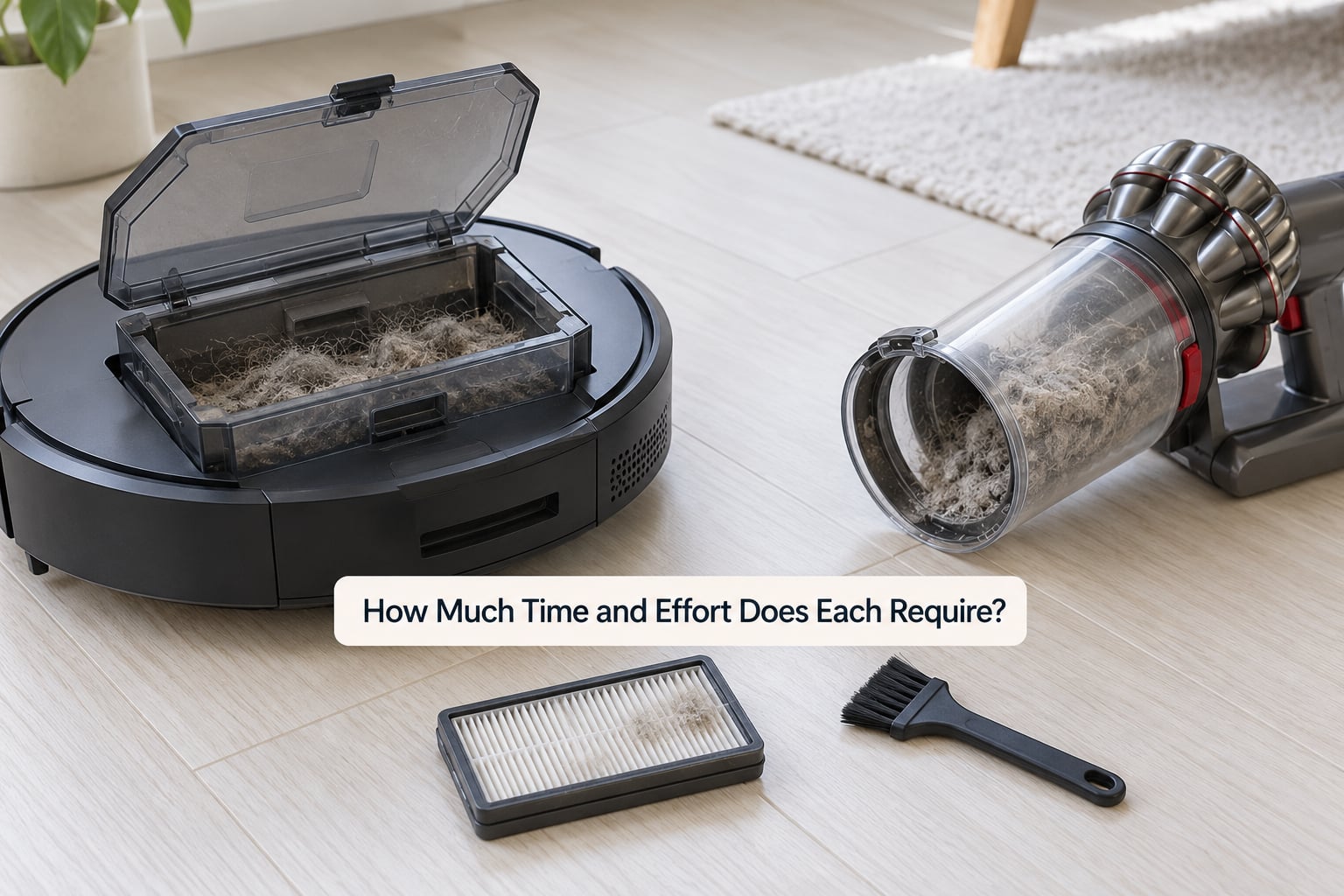
The stick vacuum costs you time; the robot costs you occasional maintenance
A stick vacuum session is 30 to 60 minutes of physical work per home, and the job only happens when you decide to do it. Long-term owners often describe cordless machines as powerful but finicky: the filter needs rinsing every month or two, the battery ages after a few years, and hair around the brush roll means regular cutting with the comb on the wand.
A robot asks almost nothing of you between runs. Empty the bin or the self-emptying bag, refill the water tank, drop a fresh mop pad on when the old one smells, and pull hair off the brush roll every week or two. Hair tangling is the complaint that most undercuts the set-and-forget promise, especially with long-haired pets.
Neither device is fully hands-off
Robots still get hung up on thresholds, rug edges, cables and cat bowls, and their maps get confused when you move furniture around. Owners on home-maintenance forums describe rescuing a stuck unit more often than they would like to admit. A stick vacuum never gets stuck, but it never runs while you sleep either.
Battery Life, Noise, and Home Compatibility
Stick battery runtime drops on exactly the jobs you bought it for
Rated stick vacuum runtime usually assumes normal suction. Switch to maximum or turbo for deep carpet and that figure can fall from 40 to 60 minutes down to 10 or 15. Plan to charge between rooms on a big clean, and expect the original battery to lose capacity after three to four years depending on how often you run it hot.
Robot runtimes are long because the suction demand is modest
Many robots run 90 to 180 minutes on one charge, then drive back to the dock. With a self-emptying base station, the whole job can happen while you are at work. The trade is noise: a robot running at night is a low hum that carries in a small apartment, which is the single most common complaint from owners who love the machine and still schedule it for daytime only.
Home layout decides more than specs do
Open hard-floor layouts favor robots, because clean lines and few thresholds are exactly what mapping navigation handles well. Split-level homes, stairs and rooms cluttered with cables favor the stick vacuum, since no robot crosses a staircase. Older homes with tile transitions and narrow nooks are the awkward middle case, where a mid-range robot with LiDAR does fine but a cheap bump-and-turn model will waste its time.
Which Is Cheaper to Own and Maintain?
Prices in both categories move constantly, so check current listings before you commit. The more useful comparison is which costs less to keep running over three to five years, because that is where the two differ most.
| Cost factor | Cordless stick vacuum | Robot vacuum |
|---|---|---|
| Purchase | Entry models are cheap; premium models with strong motors cost more | Entry models lack the mapping that makes them useful; useful models cost more |
| Filters | Washable, replaced every year or two | Washable plus extra high-efficiency filters, often on a schedule |
| Consumables | Battery replacement after a few years, worn brush roll | Dust bags, mop pads, side brushes, dock filters |
| Electricity | Charges only when you use it | Base station is plugged in around the clock |
| Failure impact | A dead battery is a repair, not a loss of function | A failed dock can make the whole machine useless until fixed |
| Biggest hidden cost | Time and effort, which is not in the price at all | Ongoing consumables that most buyers underestimate |
Count the consumables, not just the machine
A robot with a self-emptying base uses dust bags, spare filters and mop pads on a repeating cycle, and those add up quietly for years. A cordless stick vacuum mostly needs washable filters and, eventually, one battery. If you are deciding on cost alone and you will genuinely push the stick vacuum through the house, it is the cheaper long-term choice.
Cordless Stick Vacuum vs Robot Vacuum: Which Fits Your Lifestyle?
Choose a robot vacuum if cleaning floors is not your problem
The robot is right for you when your floors are mostly hard surfaces, your home is fairly open, and your real issue is that nothing gets swept consistently. It suits busy apartments, allergy households that want frequent light passes, and anyone who would rather press one button than find the energy for a full session.
Choose a cordless stick vacuum if you clean deeply or clean things that are not floors
The stick vacuum is right for carpet owners, multi-level homes, pet households that mind hair on upholstery and curtains, and anyone who values one thorough weekly pass. It is also the only option if cleaning the car, the sofa and the stairs is part of your week, because a robot simply cannot reach those surfaces.
A room-by-room view makes the choice obvious
| Area | Better option | Why |
|---|---|---|
| Open living room, hard floor | Robot | Repeat coverage without you lifting a finger |
| Bedroom | Robot | Low profile, gets under beds on a schedule |
| Kitchen | Both | Robot for daily crumbs and mopping, stick for spills |
| Bathroom | Stick | Tight corners, rugs and hair the robot misses |
| Stairs | Stick | Robots cannot use stairs |
| Pet hair on carpets and sofas | Stick | Suction and a mini motorized brush do the work |
| Car interior | Stick | Crevice tool, no dock, no mapping needed |
| High traffic during the day | Stick | Clean it right now instead of waiting for a schedule |
Owning both is a common and defensible answer
Long-term owners on r/VacuumCleaners usually land in the same place after a year or two: robot for the floors most days, stick vacuum for everything else. If you have the budget, that pairing removes the compromise. If you do not, buy the machine that solves your worst cleaning problem, since a mediocre machine for the wrong floor type is the expensive mistake.
Frequently Asked Questions
Which is better for me, a stick vacuum or a robot vacuum?
Pick a robot vacuum if your home is mostly open hard floors and your problem is inconsistency, since it cleans on a schedule without your effort. Pick a cordless stick vacuum if you have carpet, stairs, upholstery or pet hair to manage, because those need more suction and attachments.
What are the downsides of using a robotic vacuum cleaner?
Robot vacuums get stuck on thresholds, rug edges and cables, and their maps need redrawing when you move furniture. Hair wraps around the brush roll, docks and self-emptying bags fail or clog over time, and mopping can leave carpets and unsealed wood damp. On stairs they are simply useless.
What are the downsides of a cordless vacuum?
Cordless stick vacuums only clean when you decide to, so floors get skipped in busy weeks. Runtime falls from 40 to 60 minutes down to 10 or 15 on maximum suction, batteries lose capacity after a few years, and filters and brush rolls need regular rinsing and cutting. They also store on a wall or in a closet taking up real space.
Is it really worth getting a robot vacuum?
It is worth it when your floors are hard surfaces and you want consistent sweeping you would otherwise skip. It is less worth it in a carpet-heavy home with stairs, or if you already push a cordless vacuum through the place regularly. The cheapest models often lack the mapping quality that makes robots genuinely useful.
Is it worth getting a robot vacuum for pet hair?
Yes, as a maintenance tool. A robot keeps loose hair from building into tumbleweeds on a daily basis, which saves a lot of sweeping. For hair embedded in carpet pile and stuck to furniture, you still want a stick vacuum with a mini motorized brush. Most pet households end up using both.
Can a robot vacuum replace a stick vacuum?
On a hard-floor-only home with no stairs, a good robot with reliable mapping can handle most scheduled cleaning. It still cannot do stairs, upholstery, car interiors, edges or big spills, and deep carpet cleaning stays out of reach. In those homes, the robot reduces how often you need the stick, but does not remove it.
Conclusion: Start With Your Cleaning Routine
Before buying either machine, watch how you actually clean for one week. Count the rooms you skip, note whether you own carpet, stairs or pet furniture, and check how often you would realistically push a vacuum around. Hard floors plus inconsistency points to a robot. Carpet, stairs, upholstery or pets point to a cordless stick vacuum. The first step is simply naming the job that annoys you most, because that job decides the machine, not the feature list.