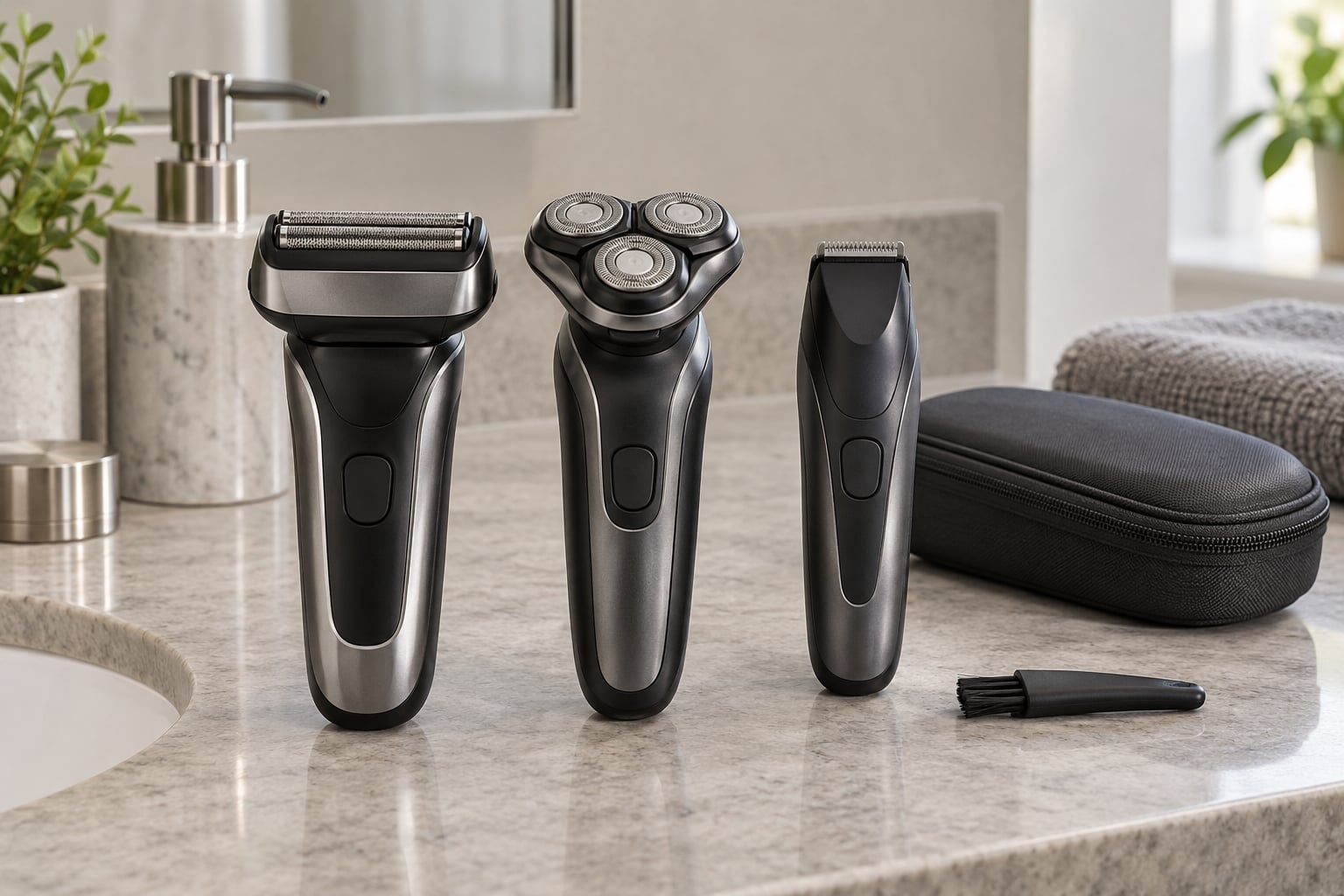
Sensitive skin rarely objects to a sharp blade. It objects to friction, heat and hair-tug, so the way to pick an electric shaver for sensitive skin is to buy the cutting system, not the marketing. Look for blades sitting behind a perforated foil or guard, a head that pivots to follow your jawline, and a motor strong enough to sever hair in one pass instead of dragging at it.
The wrong choice usually shows up as redness and stinging on the neck a few hours after shaving, or as red bumps along the jawline a day later. That pattern tells you which of the four problems below is actually going on, and each one points at a different head type. So diagnose first, then compare foil against rotary, then check the specs that reduce irritation.
Table of Contents
- What You Need to Know Before Buying
- How often do you shave, and how much do you lean on the shaver?
- Two more things worth settling now
- Which Electric Shaver Type Is Best for Sensitive Skin?
- How to Choose a Shaver That Reduces Irritation
- How to Pick an Electric Shaver for Sensitive Skin
- Step 1: Start with the head type, not the blade count
- Step 2: Check the three features you will feel on day one
- Step 3: Read the reviews for pressure, not closeness
- Step 4: Work out the running cost before you commit
- Step 5: Confirm the return window and use the first two weeks properly
- What Features Are Worth Paying for?
- How to Test and Care for Your New Shaver
- Cleaning routine that prevents folliculitis
- Technique that lowers irritation
- Frequently Asked Questions
- Is foil or rotary better for sensitive skin?
- Do electric shavers cause razor burn?
- Is 3 or 5 blades better for sensitive skin?
- Should sensitive skin use a wet shave or a dry shave?
- How often should I replace the foil or blades on an electric shaver?
- What does IPX7 mean for an electric shaver?
- Conclusion
What You Need to Know Before Buying

Start by naming your reaction, because “sensitive skin” covers four different problems and each one has a different answer.
Razor burn shows up within an hour as tightness, stinging and pink patches, concentrated on the neck and jawline rather than the cheeks. That is friction and a compromised skin barrier. Foil shavers and wet shaving address it directly.
Ingrown hairs appear as isolated inflamed bumps, usually where hair curls back into the skin after a dry shave. The cause is a shaver that lifts and drags rather than cutting at skin level.
Dry flaking and itching that starts a day later points at aftercare, not hardware. Alcohol-heavy aftershave is the usual suspect.
A reaction that appears in the same spot every time, sometimes with a rash that outlasts your stubble, is worth taking to a healthcare professional. Contact reactions to nickel in blades are real and no shaver feature will fix them.
How often do you shave, and how much do you lean on the shaver?
The central paradox of sensitive-skin shaving is that many people press harder to get a closer result, and pressure is exactly what causes irritation. Users on r/shaving repeatedly report that a foil shaver feels better when you let the machine do the work, while cheaper rotary shavers get pushed into the skin because the motor cannot catch the hair on the first pass.
Before buying, watch yourself shave for a week and note the pressure. If you are leaning on the shaver hard enough to dent the skin, an underpowered motor is the thing to fix, and a cheaper model will not fix it.
Two more things worth settling now
Wet or dry. If you shave after a hot shower or shave with gel, you need wet-and-dry capability. The rating to look for is IPX7, which means the shaver can be rinsed under a tap and immersed; a lower rating survives splash only.
Corded or cordless. Cordless gives you pressure-free use, which matters for sensitivity. Corded models deliver constant power, and users on r/shaving report that a weakening battery is what turns a decent cheap shaver into one that tugs and chews. Pick cordless with a replaceable battery or a long charge, not a sealed cell you cannot rescue.
Which Electric Shaver Type Is Best for Sensitive Skin?
Foil shavers are the least irritating type for skin that already reacts, because the blades never touch your face directly and the perforated foil lifts hair just above the surface for the cutter to take. Rotary shavers are more forgiving to use and cope better with longer growth, but their round heads apply more pressure to a small area. Hybrid designs give you a foil for the face and a rotary or trimmer head for edges, which is the most useful pattern for most people.
No type is automatically hypoallergenic. That label describes a blade material claim, not a shave result, and none of the three types removes friction from the equation.
| Factor | Foil | Rotary | Hybrid |
|---|---|---|---|
| Contact surface | Wide flexible foil across the face | Small circular heads | Foil for face, smaller head for edges |
| Shave feel | Quiet, low pressure, consistent | Louder, needs a slower hand | Varies by attachment |
| Precision | Hard on very sharp lines | Good on contours and necklines | Good, with a trimmer attachment |
| Stubble and longer growth | Needs a pre-trim on long hair | Handles longer hair better | Foil pre-trim plus rotary edges |
| Maintenance | Replaceable foil cassette, easy to rinse | Two or three rotating cutters, more crevices | Two heads to maintain |
| Common drawbacks | Less close on the neckline | More pressure per square centimetre, louder | Bigger body, higher running cost |
| Who it suits | Established sensitivity, daily shaving, wet shaving | Everyday use, forgiving technique, longer growth | Most households, face plus edges |
If you are still torn, buy foil. If your sensitivity is mild and your hair grows fast, rotary will feel more comfortable in the hand. If you shave both your face and the neckline often, hybrid saves you from owning two devices.
How to Choose a Shaver That Reduces Irritation
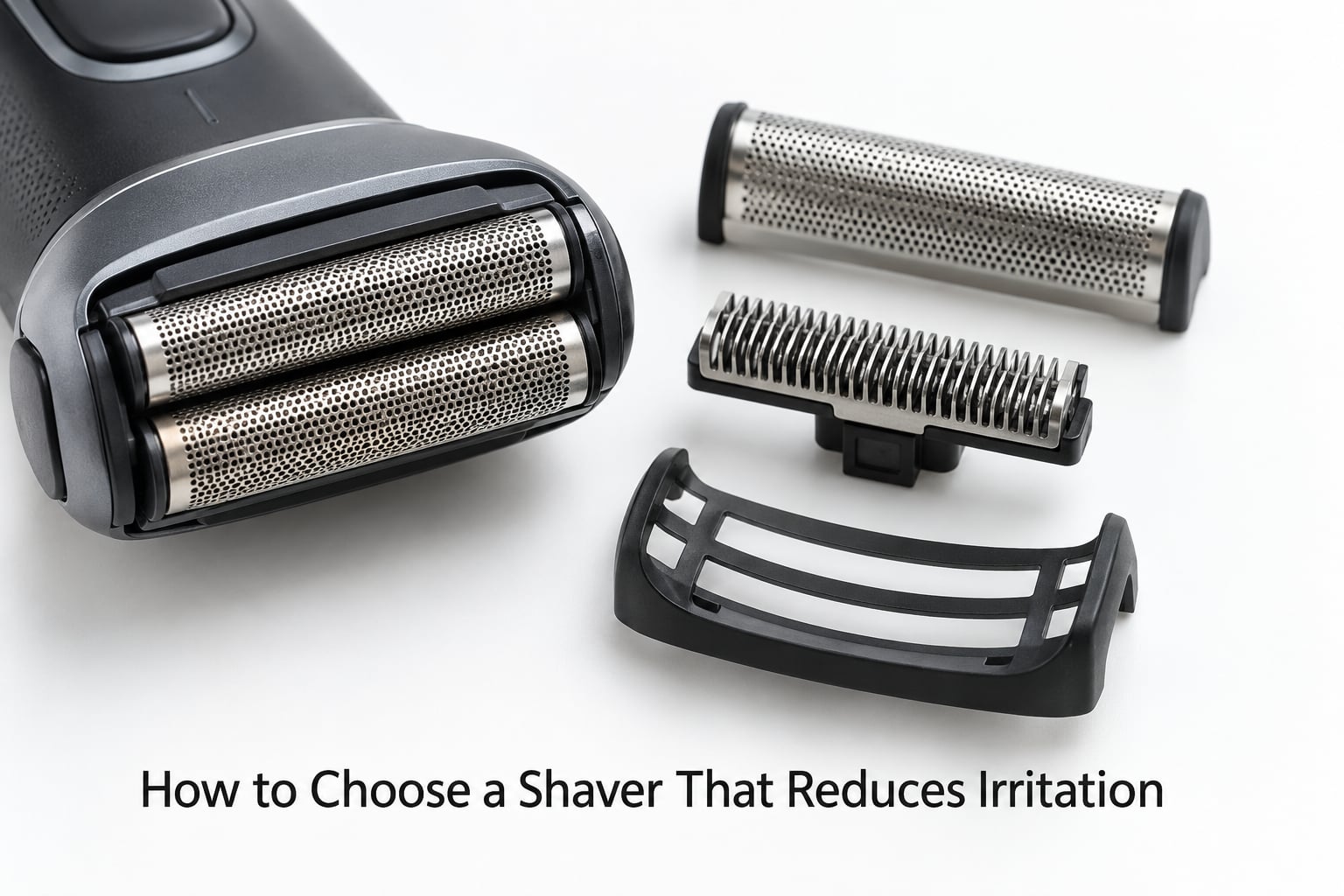
Work through these nine checks in order. Each one removes a specific source of irritation, and the first four do most of the work.
1. A multi-directional floating head. A head that pivots in several directions follows the curve of your jaw and neck so you glide instead of pushing. This is the single biggest reducer of pressure-related irritation.
2. A guarded or perforated cutting system. Blades sit behind a mesh or guard with a defined cutting geometry, keeping metal away from skin and lifting hair to the right height.
3. Cutter density over motor speed. The number printed on the box is marketing. What matters is how many cutting edges pass the hair per second and whether that rate holds when the battery drops. A fast motor with three coarse cutters still tugs; a dense cutter set at a moderate speed cuts clean.
4. A motor with constant-voltage control. If the shave changes noticeably as the battery fades, the motor is losing torque mid-session and the shaver starts pulling. This is the hidden cause of irritation in cheaper models.
5. Wet-and-dry capability with an IPX7 rating. Shaving hydrated skin reduces friction, and rinsing the head after each use keeps pores from clogging.
6. Adjustable settings you will actually use. A sensitive-skin mode that lowers power or slows the cutters is useful for the neck. Manual sensitivity dials that only exist on the base unit are pointless.
7. A cleaning dock or a head you can open fully. Folliculitis-type bumps come from trapped hair and sebum in the cutting block. A cleaning station, or at minimum a head that separates without tools, is worth more than an exfoliating attachment.
8. A comfortable grip and balanced weight. A heavy shaver gets pressed harder because the hand compensates for it.
9. Available replacement heads. Check before you buy that the maker sells foil and cutter refills for this model, and for how long. A dull foil forces longer, harder passes and undoes every other feature on this list.
How to Pick an Electric Shaver for Sensitive Skin
Step 1: Start with the head type, not the blade count
Decide foil, rotary or hybrid from your reaction pattern and your hair. Skip the blade-count marketing entirely; go back to the reason you are shopping.
Step 2: Check the three features you will feel on day one
Floating multi-directional head, guarded cutting system, constant-voltage motor. If a listing mentions none of these, treat it as a budget model regardless of how it is priced.
Step 3: Read the reviews for pressure, not closeness
Search the review text for words like tugging, chewing or needing pressure rather than for closeness. Buyers who wanted the closest possible shave describe the shavers that irritated them, and that is the signal you need.
Step 4: Work out the running cost before you commit
Add the price of the head or cutter refill, and the interval between replacements. Most manufacturers expect replacement every 12 to 24 months, and the figure is published in the manual. A cheap body with expensive or discontinued refills is an expensive shaver.
Step 5: Confirm the return window and use the first two weeks properly
Keep the packaging and note the return deadline on the day it arrives. Shave with it for two weeks using your normal technique and a fresh head. Press lightly on the neck, shave after a warm shower, and see whether redness appears on day one or day two.
If redness shows up on day one, the head type is wrong for you. If it shows up on day three and smells or weeps, you are looking at a cleaning problem. Neither verdict is something the return policy will explain for you, which is why the two-week test matters.
What Features Are Worth Paying for?
Three features genuinely reduce irritation: the floating head, the guarded cutting system and the motor. Everything else is either convenience or a phrase on the box. Here is how the common claims sort out.
| Feature or claim | Real benefit | Limitation | Priority |
|---|---|---|---|
| Floating multi-directional head | Follows contours, cuts pressure | Adds bulk to the body | High |
| Perforated foil or skin guard | Keeps blades off skin, lifts hair evenly | Very thin foil can bend on stubble | High |
| Constant-voltage motor | Consistent cut as the battery drops | Costs more than a basic motor | High |
| IPX7 wet and dry | Shaves over gel, rinses clean | Gel can clog a foil if not rinsed | Medium-high |
| Cleaning dock | Removes hair and oil that cause bumps | Adds a part to maintain and charge | Medium-high |
| Sensitive-skin mode | Lower power for the neck | Still a fast machine at a lower setting | Medium |
| Hypoallergenic or nickel-free | Reduces the chance of a metal contact reaction | Describes the blade only, not the shave | Medium if you react to metal |
| Skin comfort, comfort guard, aloe strip | A glider strip or smoother foil edge | Says nothing about cut quality or motor power | Low |
| Exfoliating attachment | Clears dead skin between shaves | Rougher contact, wrong for irritated skin | Low for sensitive skin |
Contour-following is real and useful, but it only means the head pivots. It does not mean the shave will be gentle on its own.
How to Test and Care for Your New Shaver
Introduce a new shaver gradually. Shave every other day for the first week so you can tell a reaction from normal stubble itch, and keep using the same aftershave so nothing else changes.
Cleaning routine that prevents folliculitis
Tap the head out over a bin after every shave. Rinse it under the tap if the shaver is IPX7 rated, then run the cleaning station or use the brush supplied. Open the cutting block every few days to lift out trapped hairs. Let it dry fully on the dock or a shelf rather than in a closed case, because moisture plus trapped sebum is what produces the red bumps people mistake for bad blades.
Replace the foil or cutters on the manufacturer’s schedule, usually every 12 to 24 months, and sooner if the cutter drags or the foil tears. Users on r/BuyItForLife and r/shaving make the same point about long-term ownership: the shaver is cheap, the heads are the recurring cost, and a missing refill is what ends the relationship.
Technique that lowers irritation
Warm the skin with a hot shower or a warm flannel for a minute. Apply a shaving gel or foam and leave it for a moment to soften the hair. Shave with the grain first on light passes, then go across the grain only where you need it. Rinse the head often. Keep pressure light enough that you can still feel the skin under the shaver.
For aftershave, choose an alcohol-free, fragrance-free balm. Alcohol denatures skin proteins and tightens the barrier, which is a large part of the day-two sting people blame on the shaver. Aloe and chamomile are mild and fine; synthetic fragrance and drying alcohols are the two to skip.
Stop using the shaver and speak to a healthcare professional if redness persists for more than a day or two after a shave, if bumps spread or weep, or if you develop a rash in a fixed location. Those patterns point at skin conditions or a contact allergy rather than a bad shaver.
Frequently Asked Questions
Is foil or rotary better for sensitive skin?
Foil is gentler on skin that already reacts, because the blades sit behind a perforated foil and never touch your face directly, so less pressure is needed. Rotary shavers handle longer growth and forgive clumsy technique better, but concentrate pressure on a small circular head. If your main problem is redness and stinging, choose foil. If your hair grows fast and sensitivity is mild, rotary is easier to live with.
Do electric shavers cause razor burn?
They can, but usually for mechanical reasons rather than blade sharpness. A weak motor that tugs at hairs, pressing too hard, shaving dry, or reusing a dull foil all increase friction against a weakened skin barrier. Electric shavers cause less razor burn than manual razors for most people precisely because the blade is guarded, but that advantage disappears if you lean on the machine or let the head get clogged.
Is 3 or 5 blades better for sensitive skin?
Blade count on the box is mostly marketing. What matters is cutter density, meaning how many cutting edges pass the hair per second, and whether that rate stays constant as the battery fades. A three-element head with fine cutters can cut on the first pass, which is what reduces irritation. A five-element head with coarse cutters will tug no matter how fast the motor spins.
Should sensitive skin use a wet shave or a dry shave?
Wet is usually better, because hydration reduces the friction that drives irritation and softens the hair so the shaver catches it on the first pass. You need an IPX7 rating to do it properly, since gel and running water require the shaver to be immersion-safe. Always rinse gel out of the head afterwards, because trapped product under the foil causes the irritation you were trying to avoid.
How often should I replace the foil or blades on an electric shaver?
Most manufacturers specify every 12 to 24 months, and the interval shortens if you have coarse hair or shave daily. Signs it is time are a shaver that needs more passes, a foil you can catch a fingernail in, and cutting that feels like dragging rather than clipping. A dull head forces longer and harder passes, which produces exactly the irritation you bought the shaver to avoid.
What does IPX7 mean for an electric shaver?
IPX7 is a water-resistance rating meaning the shaver can be submerged in water up to one metre for a short period, so you can rinse it under a tap and use shaving gel with it. It is not a claim about steam, hot water or salt water. Rinsing after each shave and letting the head dry fully is what prevents the trapped hair and sebum that cause red bumps.
Conclusion
Pick the cutting system first: foil for skin that already stings, rotary when your hair grows faster than your patience. Then confirm the floating head, the guarded cutting system and a constant-voltage motor, because those three do the real work of reducing irritation.
Add wet-and-dry capability, a cleaning routine you will actually follow, and confirmed availability of replacement heads. Use the return window to shave for two weeks, watch for redness on day one or day two, and keep an alcohol-free, fragrance-free balm within reach. If irritation continues despite a good shaver and light pressure, that is a conversation for a healthcare professional, not a reason to buy a sharper machine.