Most wrist trackers land within a few beats per minute of the truth while you are sitting still, and drift by roughly 5 to 20 bpm once movement gets hard. In other words, how accurate is heart rate on a wrist tracker depends almost entirely on what your body is doing at the moment you read it.
Optical sensors get a bad reputation they half deserve. They are not broken, they are just measuring blood volume through skin while you are also swinging your arm at 170 bpm. Below is what the research actually shows, what makes readings wander, and how to check your own device without a lab.
Table of Contents
- How Accurate Is Heart Rate on a Wrist Tracker?
- What Does Heart Rate Accuracy Actually Mean?
- Why Wrist Tracker Readings Sometimes Drift
- How Much Do Fit and Placement Matter?
- Does Exercise Intensity Affect Accuracy?
- Can Skin Tone or Skin Condition Affect the Sensor?
- Which Sensor Types Are More Accurate?
- How to Test a Wrist Tracker at Home
- How to Tell Whether a Reading Seems Suspicious
- Frequently Asked Questions
- How accurate is heart rate on a wrist tracker compared with a chest strap?
- Are wrist heart rate monitors accurate enough for running and cycling?
- Why does my fitness tracker show sudden heart rate spikes while I am sitting still?
- How often should I replace an old wrist tracker for accurate readings?
- Can I use a wrist tracker to diagnose a heart or medical condition?
- What to Do First
How Accurate Is Heart Rate on a Wrist Tracker?
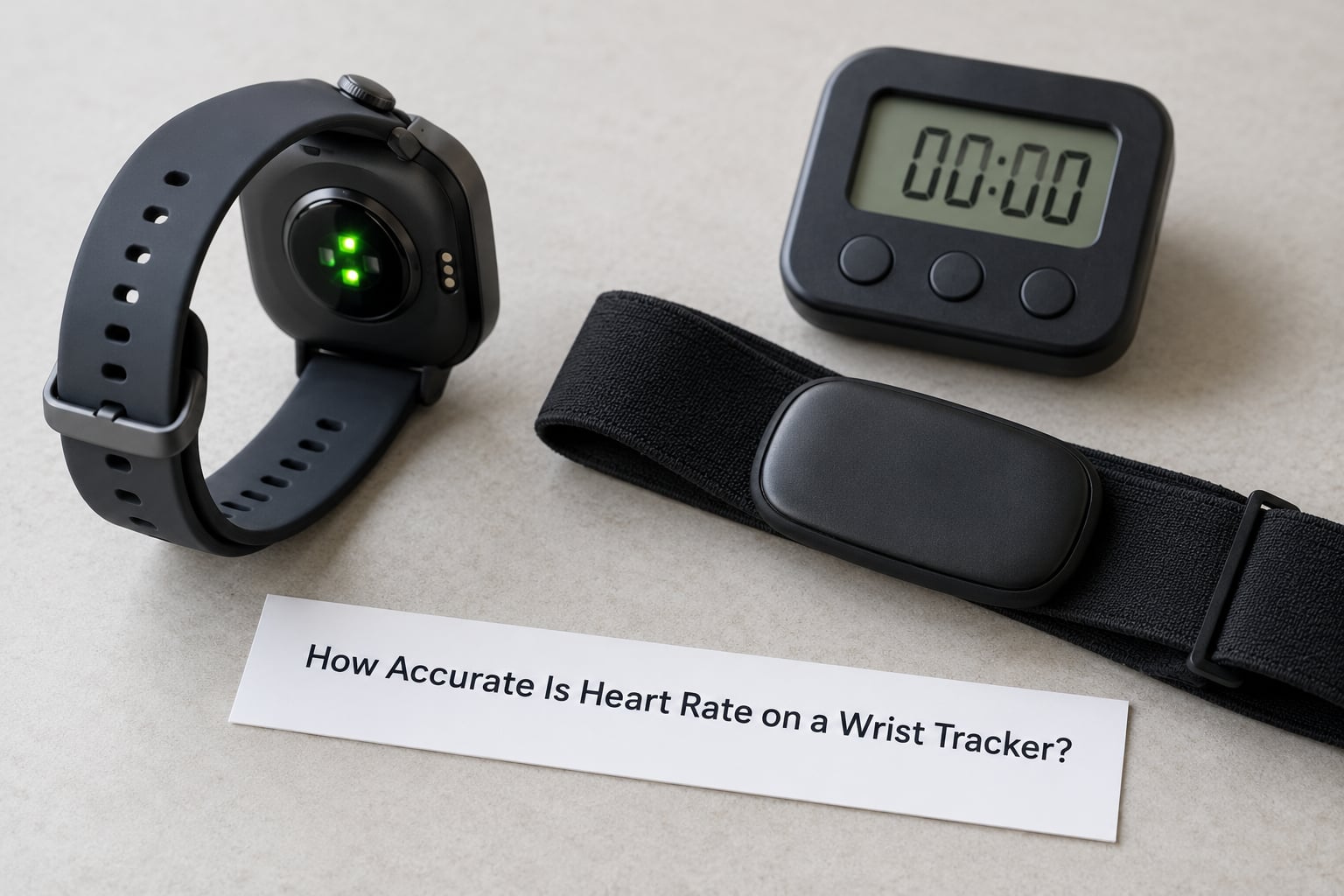
Here is the short version: trustworthy at rest, generally fine for steady aerobic work, unreliable for anything with sudden effort changes or heavy arm swing.
| Situation | Typical error vs a chest-strap ECG | Verdict |
|---|---|---|
| Sitting or lying still | About 1 to 3 bpm; one evaluation found wrist devices agreed with ECG readings around 89 percent of the time while seated | Trust it |
| Walking | Low single-digit bpm | Trust it |
| Steady running | Mean absolute percentage error around 1.2 percent in a widely cited 2016 study | Trust it |
| Cycling | Small to moderate, since the arm is usually still | Trust it |
| HIIT or intervals | Often 5 to 20 bpm behind, with the device lagging several seconds on every change in effort | Use a chest strap |
| Strength training | Wild spikes and dropouts as the wrist rolls under load | Ignore peaks |
| Racquet sports | Bias of roughly minus 16.5 bpm has been reported for badminton using a wrist device | Use a chest strap |
| Sleep and resting overnight | Usually within a few bpm if the sensor keeps skin contact | Good for trends |
Two more numbers worth holding on to. Correlation between wrist devices and ECG runs about 0.83 to 0.91 in reviews, against roughly 0.99 for chest straps, which tells you where the ceiling is. And research published in 2023 concluded that PPG technology has the potential to reach about 91 percent of ECG accuracy, so the gap is narrowing but has not closed.
Never treat any of this as a medical reading. Consumer trackers are fitness tools, and the moment a question becomes about diagnosing something, a validated medical device and a clinician take over.
What Does Heart Rate Accuracy Actually Mean?
Researchers usually measure error two ways. Mean absolute error is the average gap in beats per minute between the tracker and the reference. Mean absolute percentage error expresses that gap as a percentage, which is how most validation papers report running and cycling results.
Both numbers can look reassuring and still hide a problem. A device that reads 150 when the truth is 160 for most of a workout, then corrects late, gives you a good average and a bad zone chart.
That is the practical distinction. Trends across a run are usually fine. Exact zone boundaries matter because zone training is calculated from your measured maximum heart rate, so an 8 bpm error near that ceiling pushes the boundary between zones 4 and 5 into the wrong place for the whole session.
Why Wrist Tracker Readings Sometimes Drift
Optical sensing, or photoplethysmography (PPG), shines green LEDs into the skin and reads light bouncing back while blood volume pulses under the sensor. Anything that changes that reflected light is a potential source of error, and most of the time you cannot control it.
- Movement. Arm swing creates rhythmic changes in reflected light that look a lot like a pulse. During intervals the sensor sometimes locks onto cadence instead of blood flow.
- Fit. Too loose and the sensor loses skin contact and drifts upward. Too tight and it shifts and presses hard enough to restrict blood flow.
- Sweat and water. A wet surface changes light transmission, and swimming adds the obvious problem of a device that is not meant to be worn in water.
- Skin contact. A tattoo under the sensor, a thick watch band, or a sensor pressing against the underside of the wrist all degrade the reading.
- Temperature. Cold skin reduces surface blood volume. Hot, flushed skin increases it. Both push readings away from what the heart is actually doing.
- Warm-up lag. The first few minutes of a workout are frequently wrong while the sensor locks on. Users report this almost as often as the interval problem.
- Device age. An ageing sensor or a device that no longer fits well after weight change tends to lose accuracy quietly.
Compare two everyday examples. Typing on a keyboard produces small rhythmic wrist motions and a steady heart rate, so the reading usually looks clean. Running produces large arm swings at a cadence close to your step rate, which is where impossible numbers start appearing.
How Much Do Fit and Placement Matter?
Placement changes results more than most people expect. A community validation project on Reddit’s Fitbit community found that simply moving the band about three finger widths up the forearm improved accuracy noticeably.
That makes sense mechanically. The flat area above the bony wrist moves less when you flex your hand than the underside of the wrist, which is why manufacturers place the sensor on the back of the watch rather than underneath it.
- Wear the tracker on the non-dominant wrist if one arm does more of the work, such as a racket hand or a lifting hand.
- Sit it two to three finger widths above the bony wrist joint, snug enough that it does not rotate when you make a fist.
- Use the snugness the manufacturer specifies. Wear it tight during a workout and looser for sleep if your device supports both modes.
- Start clean and dry. Wipe the sensor and the skin underneath it before a session.
- Give it a minute. Let the reading settle after you put it on rather than trusting the first number.
Signs of poor contact are easy to spot: readings that jump 30 bpm without any change in effort, a resting value that swings wildly between days, or numbers that freeze during movement. If you see those, move the tracker before you start blaming the hardware.
Does Exercise Intensity Affect Accuracy?
Yes, and it is the single biggest factor. Accuracy holds up well through walking, steady running and steady cycling, then degrades as intensity rises and movement becomes more rhythmic and more forceful.
A 2016 study by Stahl and colleagues, published in the Journal of Sports Sciences, concluded that wrist activity trackers gave accurate heart rate measurements during walking and running. Later studies pushed into harder territory and found wider error bands, particularly during intervals and racket sports.
The pattern is consistent across research groups. Steady work with a low arm swing gives the algorithm a clean signal. High-intensity work does two things at once: it raises the true heart rate quickly, and it fills the optical signal with motion noise. The device’s smoothing then works against you by averaging across the change you actually care about.
Sleep is the easy case. Movement is minimal, contact is stable, and the values that matter most are resting heart rate and heart rate variability trends. Those are useful within a device, but compare them only to the same device, not to a number from a chest strap or a clinic.
Can Skin Tone or Skin Condition Affect the Sensor?
The honest answer is that the evidence points in a worrying direction but is not settled, and study designs differ enough that no single result should be turned into a verdict about a specific person or device.
A widely reported 2020 finding indicated that PPG errors occurred up to 15 percent more frequently in darker skin. The proposed mechanisms involve how melanin absorbs and scatters light, which can reduce the contrast of the pulse signal for the sensor.
There is a second finding worth holding onto at the same time. The 2023 research suggesting PPG can reach about 91 percent of ECG accuracy looked at newer multi-LED sensor designs, which add green, red and infrared wavelengths to extract a signal that is less dependent on any single optical property.
Tattoos under the sensor, very light or very dark skin, and poor peripheral circulation all fall into the same practical bucket: signal quality varies, so the same device can feel less consistent from one person to the next. You cannot diagnose a sensor fault from one reading, and you should not try. Compare repeated measurements and, if accuracy matters for your training, validate against a chest strap rather than reasoning about skin tone in the abstract.
Which Sensor Types Are More Accurate?
There are four families of device, and they differ mostly in where the signal comes from.
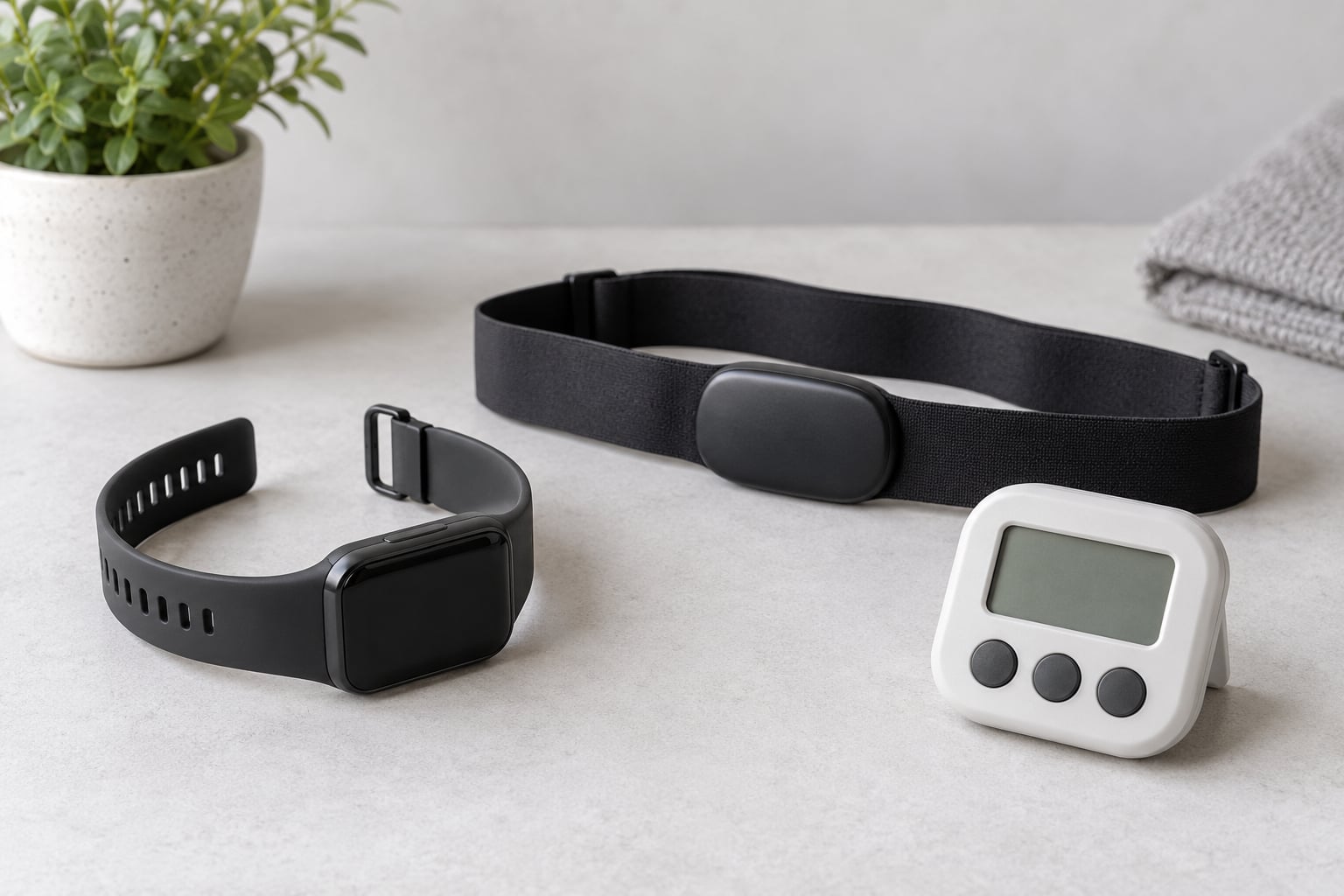
- Optical wrist sensors (PPG). Green LEDs and a photodiode read blood volume through the skin. Convenient, battery-friendly, always on. Accuracy depends heavily on movement and fit.
- Electrical wrist straps. Two electrodes measure the electrical rhythm of the heart, like a mini ECG. More accurate than optics and comfortable, though sweat and poor contact still interfere.
- Chest straps. The same electrical principle across the sternum, close to the heart. This is the reference standard consumer devices are tested against, and it is what you want for intervals or threshold sessions.
- Arm bands. Optical sensors moved to the bicep or upper forearm, where movement is even smaller than at the wrist. A reasonable middle ground, at the cost of one more thing to wear.
The trade-off is straightforward. Optical wrist devices win on comfort, price and battery life. Chest straps win on accuracy and responsiveness, and cost you the convenience of something you can wear all day.
There is one warning that belongs here. Plenty of consumer heart rate validation studies are funded or commissioned by the manufacturer, and researchers on the StrongerByScience community raise this routinely. Read published error rates as a useful range rather than a verdict on your specific device.
How to Test a Wrist Tracker at Home
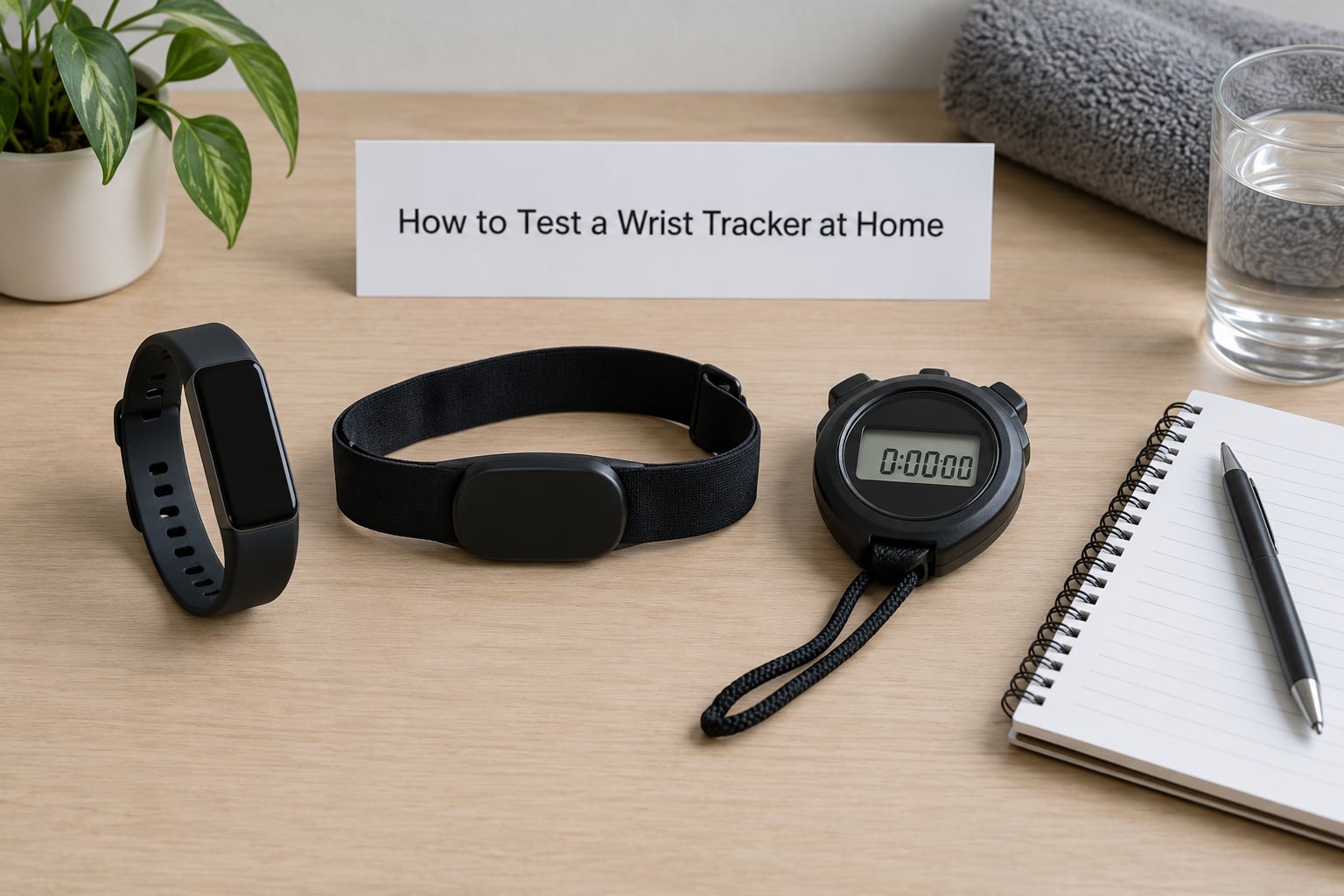
This takes about fifteen minutes and gives you a real answer for your tracker, on your wrist, in your sport.
- Resting comparison. Sit quietly for five minutes. Note the tracker reading, then take your own pulse at the wrist or neck for a full minute and count. Write both numbers down. Repeat three times.
- Light movement. Walk briskly for three minutes and compare the tracker against a manual count. This catches the fit problems a resting test hides.
- Back-to-back comparison. Wear a chest strap and your tracker together during a normal workout. Compare the two traces at the same points, especially during any interval section.
- Look at the pattern. Calculate the gap in bpm for each comparison. A consistent gap suggests a calibration offset; a wildly varying gap points to fit, placement or a sensor problem.
Repeat the test in different conditions rather than trusting one sample. Cold morning, warm afternoon, sweaty session, different wrist.
How to Tell Whether a Reading Seems Suspicious
A few patterns reliably indicate a sensor artifact rather than a real change in your heart.
- An abrupt jump of 30 bpm or more while your effort has not changed.
- A reading of zero, or a sudden drop, often when the watch shifts or loses skin contact mid-session.
- Values that repeat the same pattern as your arm swing or step cadence.
- Alert notifications about an unusually low resting heart rate right after you have moved the device or changed your wrist.
- Two devices that disagree by more than about 10 bpm at the same moment in the same workout.
What to do: take the device off, check your own pulse, and put it back on properly. If the manual pulse and the wrist reading disagree consistently, tighten the fit, move it two to three finger widths up the arm, and test again.
A wrist tracker is not a diagnostic device and cannot tell you whether a heart rhythm is normal or abnormal. If you have persistent concerns, symptoms such as chest pain, fainting, breathlessness or palpitations, or an alert that genuinely worries you, speak to a doctor. Do not use a fitness band to rule a medical question either way.
Frequently Asked Questions
How accurate is heart rate on a wrist tracker compared with a chest strap?
A chest strap is the more accurate device, typically correlating with an ECG at around 0.99 compared with roughly 0.83 to 0.91 for wrist trackers. At rest the gap is small and often only a few beats per minute. During hard intervals, weight training or racquet sports, the wrist reading can drift 5 to 20 bpm behind. For steady running or everyday use, a wrist tracker is good enough for trends.
Are wrist heart rate monitors accurate enough for running and cycling?
Yes, for steady work. A widely cited 2016 study found wrist trackers gave accurate measurements during walking and running, with a mean absolute percentage error around 1.2 percent for running. Cycling is usually easier because the arm stays still. The figures break down on interval sessions, where the sensor lags behind each change in effort, so use a chest strap for threshold or interval training.
Why does my fitness tracker show sudden heart rate spikes while I am sitting still?
Usually motion artifact or lost skin contact rather than a real change. Typing, fidgeting and shifting the device all move the sensor, and a loose band can slide far enough that the readings become noisy. Sit still for five minutes, take your own pulse for a full minute, and compare. If the two keep disagreeing, tighten the strap and move the tracker two to three finger widths above the bony wrist.
How often should I replace an old wrist tracker for accurate readings?
Replace it when readings stop being repeatable rather than on a fixed schedule. Signs include large swings in resting heart rate between days, spikes that appear while you are still, and a number that no longer matches a manual pulse count. Batteries weaken, bands stretch, and a device bought when you were ten pounds lighter may no longer make good skin contact. Confirm the problem with a home test before replacing anything.
Can I use a wrist tracker to diagnose a heart or medical condition?
No. Wrist trackers are fitness tools built to estimate a pulse optically, not medical devices. Some models offer single-lead electrical readings for awareness, but those features are not diagnostic and are not a substitute for clinical equipment. If you have symptoms such as chest pain, fainting, breathlessness or palpitations, or you are worried about an alert from your device, speak to a doctor rather than relying on the reading.
What to Do First
Tighten the strap and move the tracker two to three finger widths above the bony wrist, then run the three comparisons described above. Most accuracy complaints are placement problems, and you can find out in fifteen minutes.
After that, set expectations honestly. A wrist tracker is a good tool for trends, zone guidance and recovery signals, and it is not a diagnostic device. If your training depends on precise interval numbers or you have any personal health concerns, take those to a chest strap or a doctor instead.