Headphone break-in is mostly a fit problem, not an acoustics problem. The driver inside a new pair does not measurably change after 50 hours or 500 hours, so the honest answer to how to break in new headphones is shorter than the internet suggests: wear them at a moderate volume for short, regular sessions while the ear pads compress and your ears adjust to an unfamiliar sound signature. Most of the change people notice in week one comes from those two things, not from the electronics warming up.
That distinction matters because it tells you what to judge a new pair on. If a new over-ear pair sounds bloated or the clamping force hurts your jaw, waiting will not fix it, and plenty of buyers lose a return window waiting for a change that was never going to arrive. Manufacturer burn-in figures get repeated so often that buyers treat a bad fit as a phase to be endured.
This guide covers what you need, a repeatable routine, how long to expect real change by headphone type, and the symptoms that mean you have a defect rather than a settling cushion. Allow about ten days of ordinary use to run through it.
Table of Contents
- What You Need Before You Start
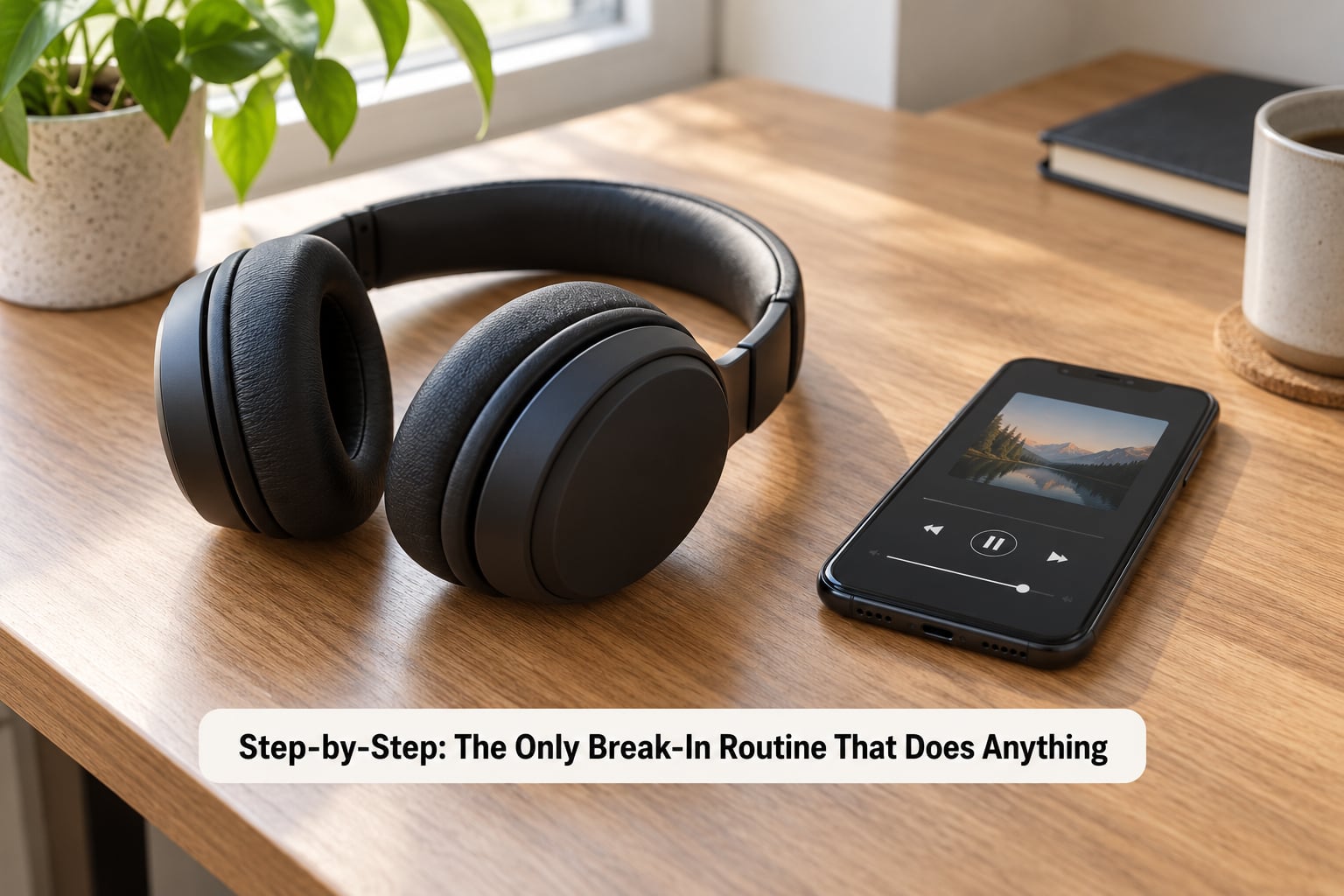
- Step-by-Step: The Only Break-In Routine That Does Anything
- Inspect the Fit and Starting Condition
- Start with Low, Familiar Sound
- Use Them Gradually and Comfortably
- Check for Changes in Sound and Comfort
- How long break-in actually takes, by headphone type
- Common Mistakes
- Frequently Asked Questions
- How long does it take to break in new headphones?
- Do all headphones need a break-in period?
- Can playing music louder help break in headphones?
- How often should I use new headphones while breaking them in?
- Should I break in noise-cancelling headphones differently?
- When should I stop treating a problem as normal break-in discomfort?
- Conclusion
What You Need Before You Start
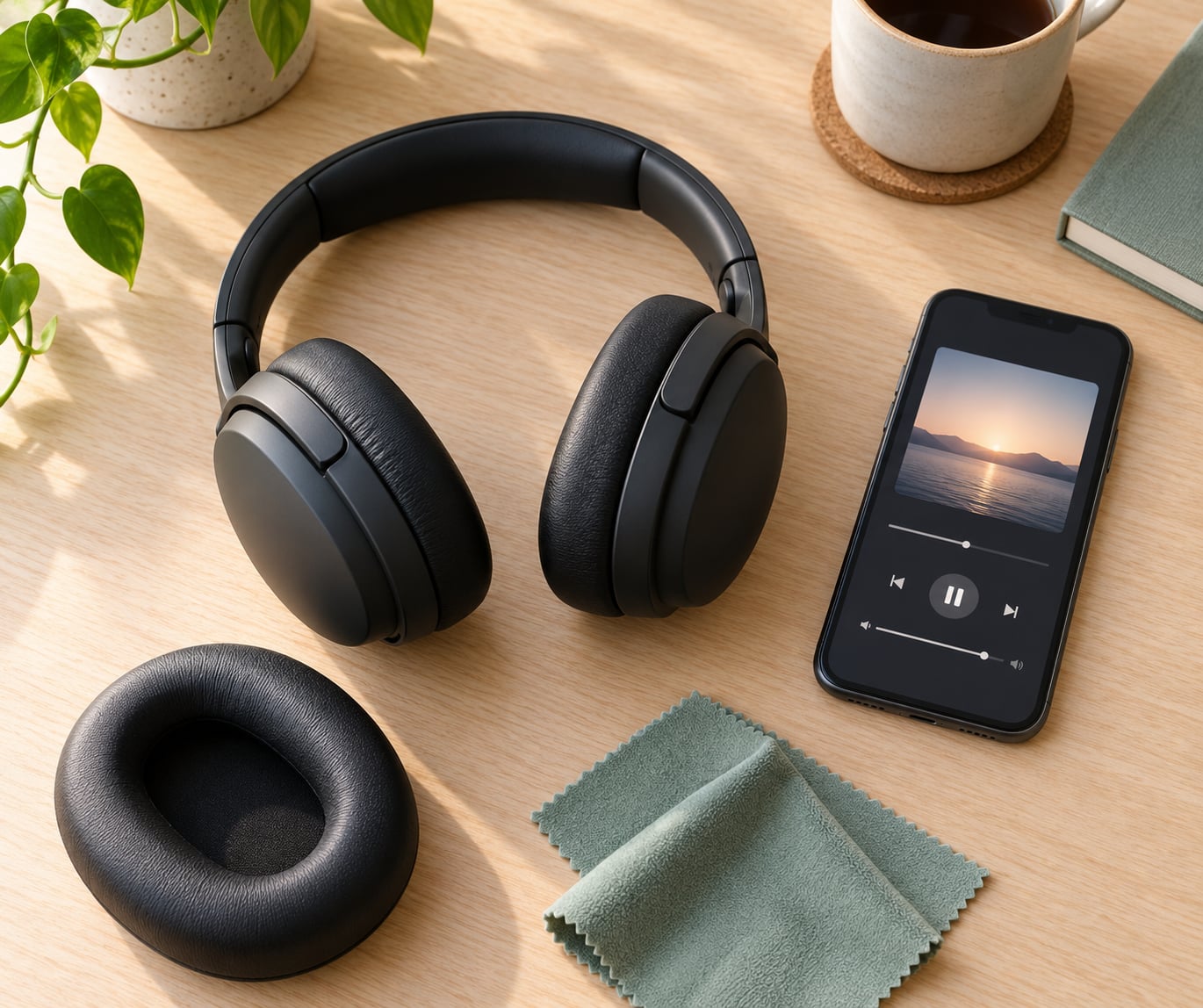
Very little. You need the headphones, a source you already know well, the manufacturer’s care instructions, and a clean soft cloth or the cleaning wipe recommended for the ear pads.
You do not need a pink noise generator, a burn-in playlist, a measuring rig, or an overnight loop running on your phone. Those setups are the single biggest waste of time in this topic, and the people who built them usually report back that nothing changed. A full frequency sweep takes about half a minute to play, so an overnight version is not a shortcut, it is just a longer way to hear the same thing.
Give yourself uninterrupted time rather than equipment. Ten short listening sessions spread across a week or two beats one ten-hour marathon, because your ears need to reset between listens for your perception to adapt honestly.
Read the care instructions before the first listen, not after something creaks. Many manufacturers specify a maximum volume for the first few sessions and include a warranty condition about physical damage. Some also specify a break-in period of their own for specific models, and when they do, that instruction beats anything in this guide.
Step-by-Step: The Only Break-In Routine That Does Anything
Inspect the Fit and Starting Condition
Before any playback, spend five minutes with the headphones in your hands. Extend the headband slowly until it reaches its full range without force, note where the sliders stop, and then release it back to its narrowest setting. Over-ear pairs almost always feel tight on day one because the headband is shipping compressed, and that compression is the mechanical thing that genuinely relaxes with use.
Press each ear cushion between your thumb and forefinger. Memory foam that has not been compressed before will resist and spring back sharply; foam that has been worn will give and stay slightly compressed. That difference is your baseline. Write a short note of what you feel, because in ten days you will not remember whether the band was tight or whether one side felt different.
Then check the cable, the hinge, the controls and the connector. Wiggle the plug gently where it meets the headphone body, and listen for a rattle or a crackle while you move the cable. A connector that cuts in and out is a hardware fault, not a break-in stage.
Finally, put them on and talk. Speak at your normal volume and note whether your own voice sounds natural, slightly muted or oddly present. A poor acoustic seal changes what you hear more than any break-in period will, and a new pair with a failing seal can take ten hours to notice while you are busy listening to music.
Start with Low, Familiar Sound
Play one track you know by heart at a moderate volume, on the same device and the same settings you will use for every later check. Not a new album, not a sweep, not a film. You need a reference your memory can measure against, and a familiar recording at a moderate level gives you a fair comparison six days from now.
Moderate means roughly 60 percent of your device volume for most music, and lower for anything dense like metal or a busy mix. The widely repeated 60/60 rule, which suggests listening at 60 percent volume for no more than 60 minutes at a stretch, is a rough habit rather than a measurement. A more meaningful anchor is the occupational noise guideline of 85 dB as an eight-hour exposure limit, which is loud enough that a phone at full volume can reach in normal use.
Blasting a new pair to see what it can do is the opposite of break-in. Loud playback raises your fatigue and your ear sensitivity, which makes a normal tuning sound worse and encourages the expectation bias that the whole myth runs on. Nothing about turning the volume up loosens a cushion or relaxes a headband.
Use Them Gradually and Comfortably
Run several short sessions instead of one long one. A workable schedule is 30 to 45 minutes at a time, three or four times a week, for the first week, with the headphones off between sessions. That rhythm gives the pads real compression cycles and gives your ears repeated low-exposure exposure to the new tuning without fatigue.
Rotate the pads roughly a quarter turn every few sessions. This distributes the compression across the foam and delays the flat spot that forms where your ears always land, which is what keeps the seal from degrading during the first months rather than the first week.
Take them off the moment discomfort appears, rather than pushing through it. Pressure on the jaw from clamping force, hot cushions against the skin, or a dull thump from a driver engaging badly are all signals to stop. Reading a burning sensation as something to endure is how people end up with headaches and blame the headphones.
Stretch the headband by hand between sessions if the fit bothers you. Hold the cups apart and apply gentle outward pressure for a minute or two, then release. Do it gradually and stop at any resistance that feels like a fault; a hinge that will not move is not a tightness problem.
Check for Changes in Sound and Comfort
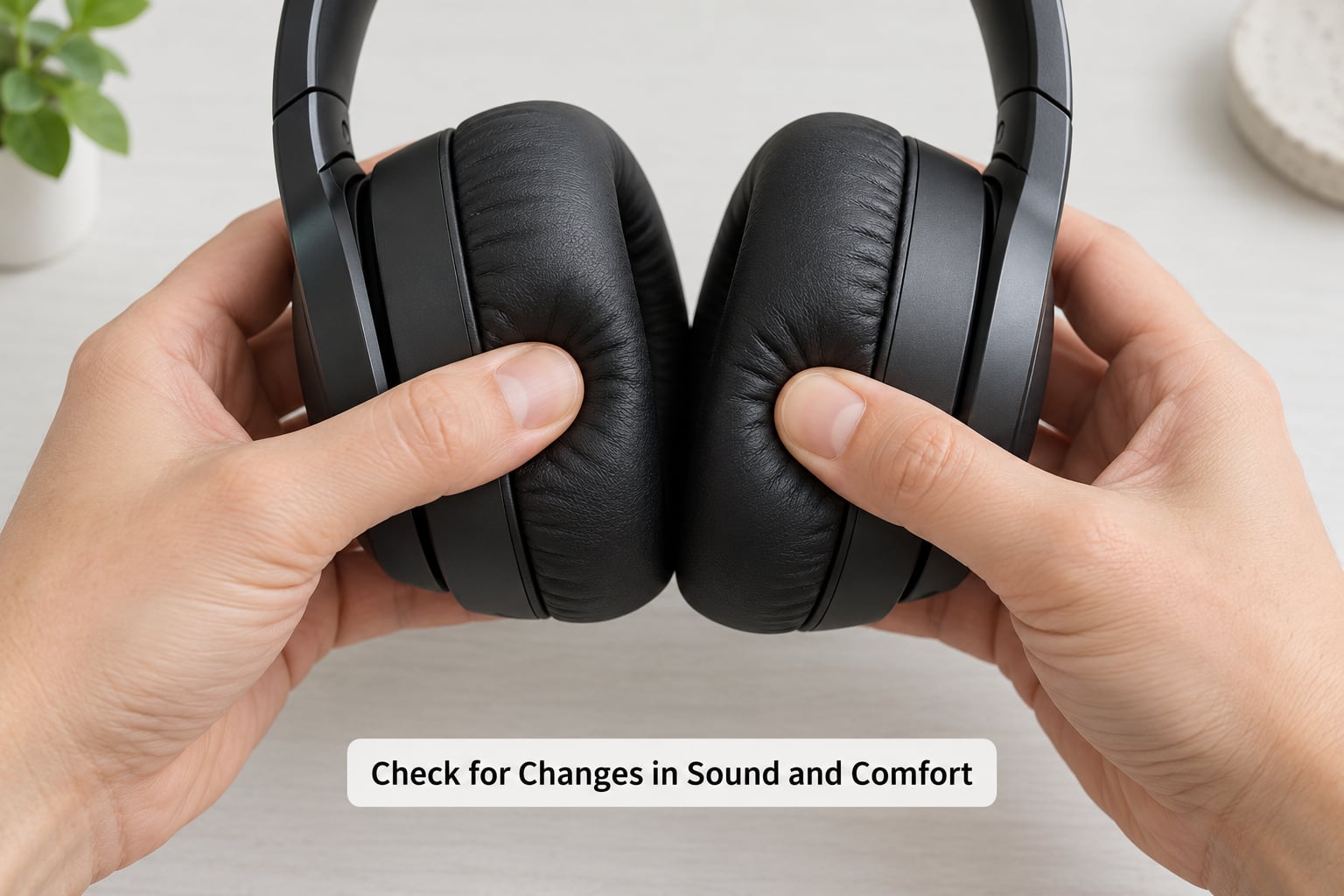
Here is what changes, what does not, and how the balance differs by headphone type. The first table is the one to memorise, because most break-in advice on the internet describes the second column as if it were the first.
| Aspect of a new pair | What changes with use | What stays the same |
|---|---|---|
| Ear pads and ear cushions | Foam compresses, takes the shape of your head, seal firms up | Material, density and thickness |
| Headband and clamping force | Tension relaxes slightly, pressure distributes more evenly | The frame material and its limits |
| Acoustic seal | Improves as pads seat, cutting outside noise and leakage | Whether the design seals well in the first place |
| Frequency response | Nothing measurable | The tuning the manufacturer shipped |
| Distortion and noise floor | Nothing measurable | Driver behaviour across the range |
| How the music sounds to you | Changes noticeably in the first two weeks | The recording and the master |
The last row is the one that produces every forum post claiming a dramatic improvement at hour 40. Your auditory system recalibrates to an unfamiliar sound signature, often within days, and the headphones take the credit. Move from bass-heavy consumer earbuds to balanced over-ear headphones and the change can be startling enough to convince you something physical happened. It did not.
Listener adaptation is also why the question of how long it takes to get used to new headphones has such a wide range of answers. The perceptual part typically settles within one to two weeks of regular listening. The physical part, cushion compression and headband relaxation, tends to move over the first few weeks of wear and then stops.
How long break-in actually takes, by headphone type
| Headphone type | Where the real change comes from | Typical time to feel settled |
|---|---|---|
| Over-ear open-back | Headband tension and long-session comfort | 1 to 2 weeks |
| Over-ear closed-back | Pad compression and seal | 3 to 10 days |
| On-ear | Pad shape around smaller ear area | 1 to 3 weeks |
| In-ear monitors | Almost entirely ear adaptation and tip fit | Several days to 2 weeks |
| True wireless earbuds | Tip seal, then ear adaptation | 3 to 7 days |
| Noise-cancelling headphones | Pad seal, which affects the cancellation effect | 3 to 10 days |
| Gaming headsets | Headband tension and microphone boom position | 1 to 2 weeks |
Anyone who has moved from bass-heavy earbuds to a balanced pair reports the same pattern: the biggest shift is in their own perception, not the hardware. The careful part is the tip fit for IEMs and earbuds, where a wrong size changes the seal and the perceived bass far more than any amount of listening will.
Now separate settling from defects, because this is where return windows get lost. Some symptoms are normal during the first sessions. Others are faults, and no amount of waiting will touch them.
| Symptom | Probably normal? | What to do |
|---|---|---|
| Tight headband that eases over the first week | Yes | Wear and stretch gently, keep sessions short |
| Cushions feel firm, then give slightly | Yes | Normal compression, continue |
| Sound seems brighter or heavier than expected at first | Yes | Give it two weeks of regular listening |
| One channel quieter than the other | No | Test on a second device, then contact the seller |
| Rattle or buzzing that follows the cable or head movement | No | Loose part or connector fault |
| Intermittent cut-out or crackle when the cable moves | No | Failing connector or internal cable |
| Permanent pain on the jaw or scalp | No | Wrong size or too much clamping force |
| Harsh distortion at low volume | No | Driver fault, exchange under warranty |
Channel imbalance is the classic misdiagnosis. A dead or weak channel on one side gets explained as breaking in, and the buyer keeps a faulty pair for a month. Test any new pair with a mono recording or a balance check before you have emotionally committed to it.
Common Mistakes
Playing loud to accelerate the process. Volume does nothing to foam or headband tension, and sustained high levels can push a dynamic driver past its comfortable excursion and add permanent distortion. Set the volume to where you would comfortably listen for three hours, then stop adjusting it.
Comparing different music each session. You cannot hear a change if every variable moved, so keep one familiar track and one device for the whole first two weeks. If you use EQ during this period, leave it off, since it confounds everything you are trying to observe.
Running pink noise or a sweep overnight. Community consensus across the major headphone forums is that burn-in has lost any real meaning and that a full sweep happens in seconds, not hours. An overnight loop mostly adds hours of exposure to your ears for no measurable change.
Forcing the headband. Stretching past the point where the sliders or hinges feel stressed risks deforming the band and, on some models, voids the warranty. Gentle outward pressure for a minute at a time is plenty, and pain is your stop signal.
Treating discomfort as adaptation. Headband pressure and heat from cushions are mechanical facts, not processes that resolve on a schedule. If the headphones hurt on day three, the fix is a fit adjustment, pad swap or return, not more hours.
Waiting out the return period. This is the mistake with the worst consequences. Most buyers who regret a purchase say they could see the problem on day one and waited two weeks for an improvement that never arrived. Audition your pair properly inside the return window, keep the packaging, and treat break-in as a reason to listen more carefully rather than a reason to be patient.
One more habit worth keeping past the first month: replace the ear pads once the foam feels flat or the seal starts to leak. New pads can change the sound of an older pair noticeably, usually restoring bass extension and reducing treble harshness. They are the genuine sound upgrade in this category, far more so than any burn-in ritual.
Frequently Asked Questions
How long does it take to break in new headphones?
Expect one to two weeks of regular listening before the fit feels natural, with cushion compression and headband tension settling within the first few days of wear. Your ears adapt to a new sound signature on a similar timeline. Nothing in the hardware changes over that period, so a pair that sounds wrong or hurts after two weeks has a problem that waiting will not solve.
Do all headphones need a break-in period?
They all benefit from a short settling period, but not for the reason usually claimed. Over-ear and on-ear pairs have foam and tension that physically shift with wear, and every pair benefits from your ears adjusting to its tuning. Cheap plastic earbuds with rigid tips have almost nothing physical to settle, so for those the adjustment is purely perceptual.
Can playing music louder help break in headphones?
No. Volume does not compress foam faster, relax a headband or improve a seal. It only raises your exposure to loud sound, which adds fatigue and can push a dynamic driver hard enough to add permanent distortion. Keep the volume moderate and use the sessions to listen well rather than to stress the drivers.
How often should I use new headphones while breaking them in?
Three or four sessions of 30 to 45 minutes a week suits most over-ear pairs, with the headphones off between listens. Short repeated sessions give the pads real compression cycles and your ears repeated exposure without fatigue, which is more useful than a single long session. Rotate the pads a quarter turn every few sessions to spread the wear.
Should I break in noise-cancelling headphones differently?
The same basic routine applies, but the ear pads matter more because they are part of the cancellation system. A loose seal reduces the cancelling effect and adds hiss, and compressing the pads properly can make a noticeable difference within a few days. Keep the ANC off at first if the pressure feels odd, and check the seal with ANC on before deciding it feels wrong.
When should I stop treating a problem as normal break-in discomfort?
Stop when the issue is mechanical rather than transitional: one channel quieter than the other, a rattle that follows head movement, a crackle when the cable moves, distortion at low volume, or pain that does not ease with shorter sessions. Those are faults or fit problems. Test a suspect pair on a second device, then use the return window while you still have it.
Conclusion
Start by putting the new pair on, checking the headband and pads, and listening to one familiar track at a moderate volume. That single session will tell you more than a week of waiting, because it separates the two real changes, a settling fit and your own adapting ears, from the one that never happens, a driver warming up.
Then wear them for 30 to 45 minutes a few times a week, take them off when something hurts, and judge the pair inside your return window rather than after it. If the sound or the fit is wrong on day one, no break-in period is coming to save it.