You clean a cordless vacuum filter by taking it out, tapping and brushing off packed dust, rinsing it under cool water only if the manual says it is washable, and letting it air dry for a full 24 hours before it goes back in. A dry-clean-only or sealed HEPA filter never touches water. The whole job takes about ten minutes plus drying time.
Most weak-suction complaints I hear about trace back to a filter that nobody has opened in months, and plenty of filters never get opened at all because the release latch looks permanent. That is fixable.
Which filter you are holding matters more than how hard you scrub it, so the model manual is the document that controls this job. Everything below assumes you have checked yours first.
Table of Contents
- What You Need
- Step-by-Step
- How to clean a cordless vacuum filter properly
- 1. Check the manual and remove the filter
- 2. Remove loose dust and hair
- 3. Wash a washable filter correctly
- 4. Rinse and dry the filter fully
- 5. Reinstall and check performance
- Common Mistakes
- Frequently Asked Questions
- Can I wash every cordless vacuum filter?
- How often should I clean a cordless vacuum filter?
- How long does a vacuum filter take to dry?
- Can I use soap or detergent to clean a cordless vacuum filter?
- Is a HEPA filter washable?
- Why does my cordless vacuum still lose suction after I clean the filter?
- Conclusion
What You Need
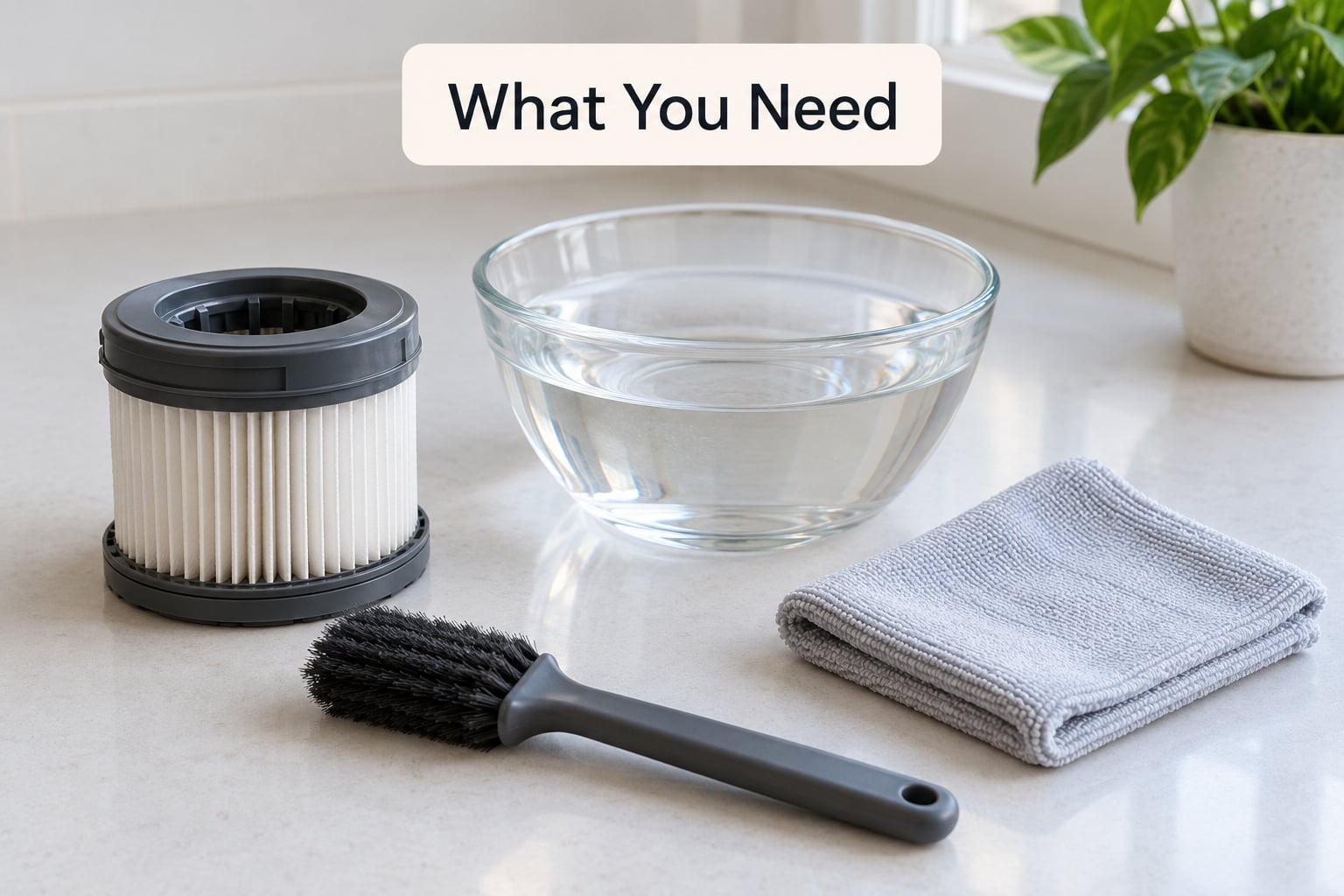
Gather these before you open the vacuum, because half a clean filter job gets abandoned when you realise the towel is upstairs.
- Your model manual. This decides whether water is allowed at all.
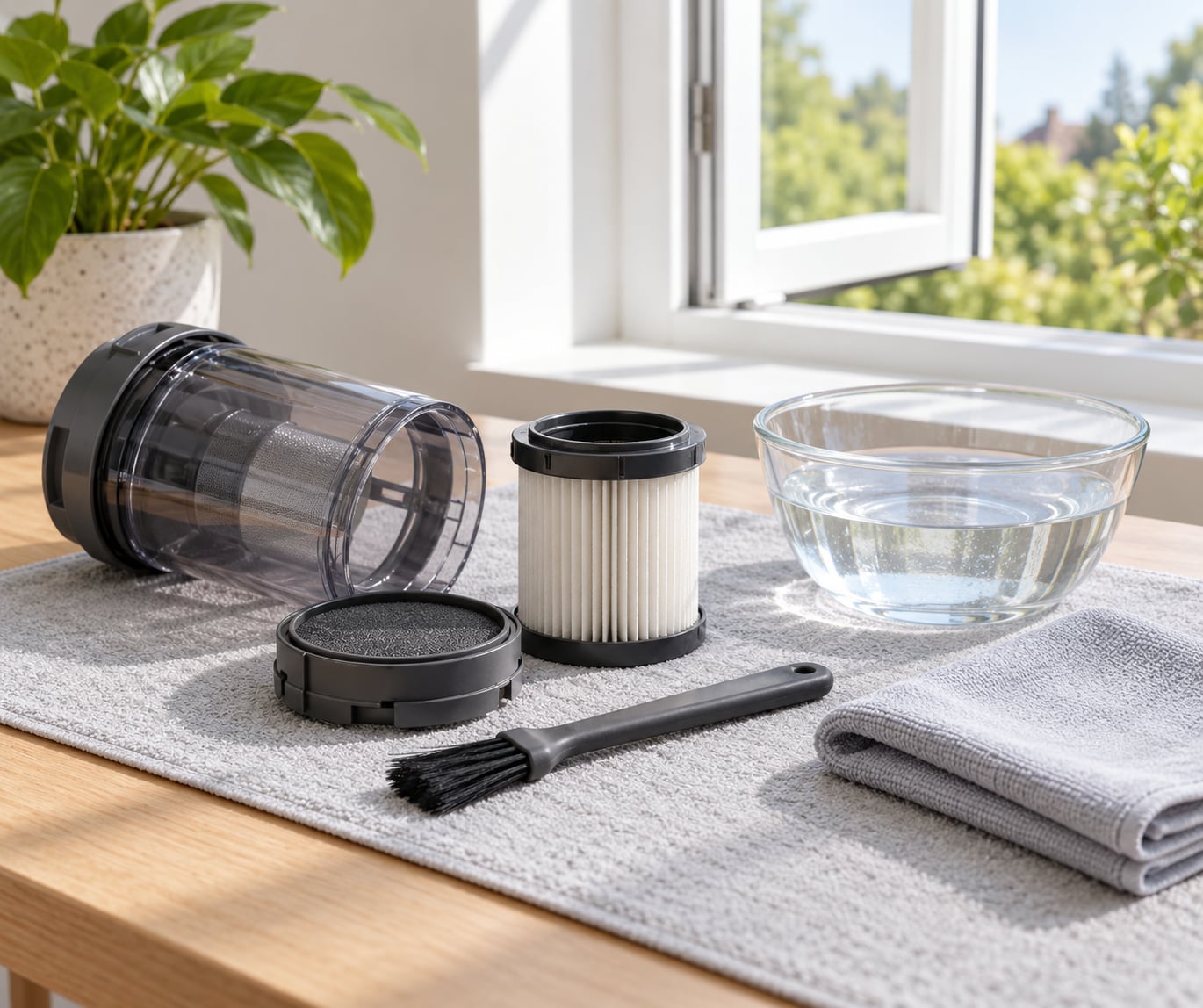
- A bin or bowl to tap dust into, plus a soft-bristled brush or a clean toothbrush for the pleats.
- A small blunt tool such as the wooden handle of a spoon for lifting compacted dust out of a frame. Plastic or wooden, never sharp metal.
- Clean water and, sometimes, a drop of mild detergent if the manufacturer permits washing.
- A lint-free cloth for wiping the housing and the sealing edge before reassembly.
- A dry, ventilated spot where the filter can stand upright overnight. A rack near an open window works well.
- Your spare filter, if you have one. Cleaning blocks the vacuum for a day, and a spare saves the argument.
Skip the compressed air can and the hair dryer. Both are common and both are wrong for pleated media, for reasons covered further down.
Step-by-Step
How to clean a cordless vacuum filter properly
The full sequence, in order. Each step has a signal that tells you it worked, and a mistake that undoes it.
- Read the manual and identify the filter type — washable, dry-clean only, or replace-only. You should be able to say which one in a sentence.
- Power down properly — switch off, then remove the battery or unplug at the wall. Never work on a vacuum that is merely switched off.
- Remove the filter using the latch or twist action for your model, supporting the cage with a hand so the plastic tabs do not snap.
- Tap and brush off the loose dust over the bin. It should visibly grey the dust in the bin. If nothing falls out, the filter is sealed and you stop here.
- Rinse under cool water only for a washable filter, working gently through the pleats. Water should run out clear at the end.
- Press out the water without twisting, then air dry for at least 24 hours in a ventilated spot.
- Check for dampness inside the pleats and foam, refit the filter the way it came out, empty the dust bin, and run the vacuum for a minute.
If step four produces no dust and step seven brings back no suction, the filter was never the problem. You have a blockage in the cyclone, wand or floor head.
1. Check the manual and remove the filter
Switch the vacuum off, then remove the battery if it uses one. A stick vacuum that is merely switched off still has a live circuit, and a battery that pops back into the handle mid-clean is how people damage latches.
Then look at the filter itself. Most carry a printed label or moulded marking that says washable, rinse, or replace. If the label has rubbed off, the model manual settles it.
Removal mechanics differ more than people expect, and this is where cages snap:
- Dyson-style stick vacuums usually pull the cylindrical filter unit straight out of the rear housing after you press the release tab. Some have a separate foam sleeve pre-fitted behind the pleated cartridge; keep them together when you reassemble.
- Shark models are usually easy: the filter sits in a frame at the base of the dust cup or behind the pod and lifts or taps straight out. Lift Away designs often have two filters, one in the pod and one in the motor housing.
- Dreame and other bagless sticks typically twist the cyclone assembly to unlock it, and the filter comes out of the top of the cylinder afterwards. Follow the arrow rather than forcing it.
- Miele Triflex ranges pull the fine dust filter up and twist anti-clockwise, and the pre-filter inside is released separately. Miele’s guidance is dry cleaning only, with no water on the fine dust filter.
- LG cordless models pull the exhaust filter out by its handle after the dust bin separates.
Support the cage with your other hand and pull with the tab rather than prying at the frame. A bent latch is the most common repair on these vacuums, and it is far cheaper to prevent than to fix.
2. Remove loose dust and hair
Hold the filter over a bin and tap the rubberised edge gently. That alone removes most of what a filter collects, and it costs nothing.
Then run a soft brush or clean toothbrush down the pleats, always towards the open end of the fold so dust falls out instead of being pushed deeper. Work the brush lightly. You are loosening debris, not scrubbing.
Pet hair wraps around the sealing edge and the frame where the pleats meet. Lift it off with fingers or the blunt end of a wooden tool, and keep your eyes on the same spot as you work round. Reddit commenters cleaning Dyson filters reach for a long blunt object for exactly this reason, and the blunt part is the important half of that advice.
You will know it worked when the bin holds a visible layer of grey dust and the pleats look pale again rather than furry.
3. Wash a washable filter correctly
If the manual permits washing, run cool or lukewarm water over the filter and work your fingers gently through the pleats from the closed end to the open end. Let dirty water run out. Repeat until the water leaving the filter runs clear.
A small drop of mild detergent is acceptable where the manufacturer allows a cleaner. What is not acceptable by default: dish soap, which leaves a film that catches dust faster than the dirt did; bleach; solvents; hot water; and washing machine cycles, which destroy the frame.
Never twist the filter to squeeze it out. That is how the rubberised seal tears and the media creases permanently, and the filter stops sealing once the frame is bent.
Here is what each filter type allows, and what it forbids:
- Washable pleated cartridge. Use cool or lukewarm water, mild detergent if the manual allows it, and a soft brush. Avoid hot water, bleach, solvents, dish soap, squeezing and the dishwasher.
- Washable foam or mesh pre-filter. Cool water and gentle hand washing with a thorough rinse. No twisting, no wringing, no heat drying.
- Dry-clean only filter. Tapping over a bin, soft brushing, and a blunt tool for packed dust. No water at all, and no detergent.
- Sealed true HEPA cartridge. Dry cleaning only, then replacement once it is loaded. Water of any kind wets and collapses the fine media.
- Replace-only filter. Nothing but light dry dusting, then a new filter. No washing, no brushing into the media, no reuse.
That last distinction catches people out. A true HEPA cartridge is sealed media, and water gets into it, collapses the fibres and wicks moisture towards the motor, which is a worse outcome than a dirty filter. A HEPA-style washable filter has a different construction that survives rinsing, and the manual will say so.
4. Rinse and dry the filter fully
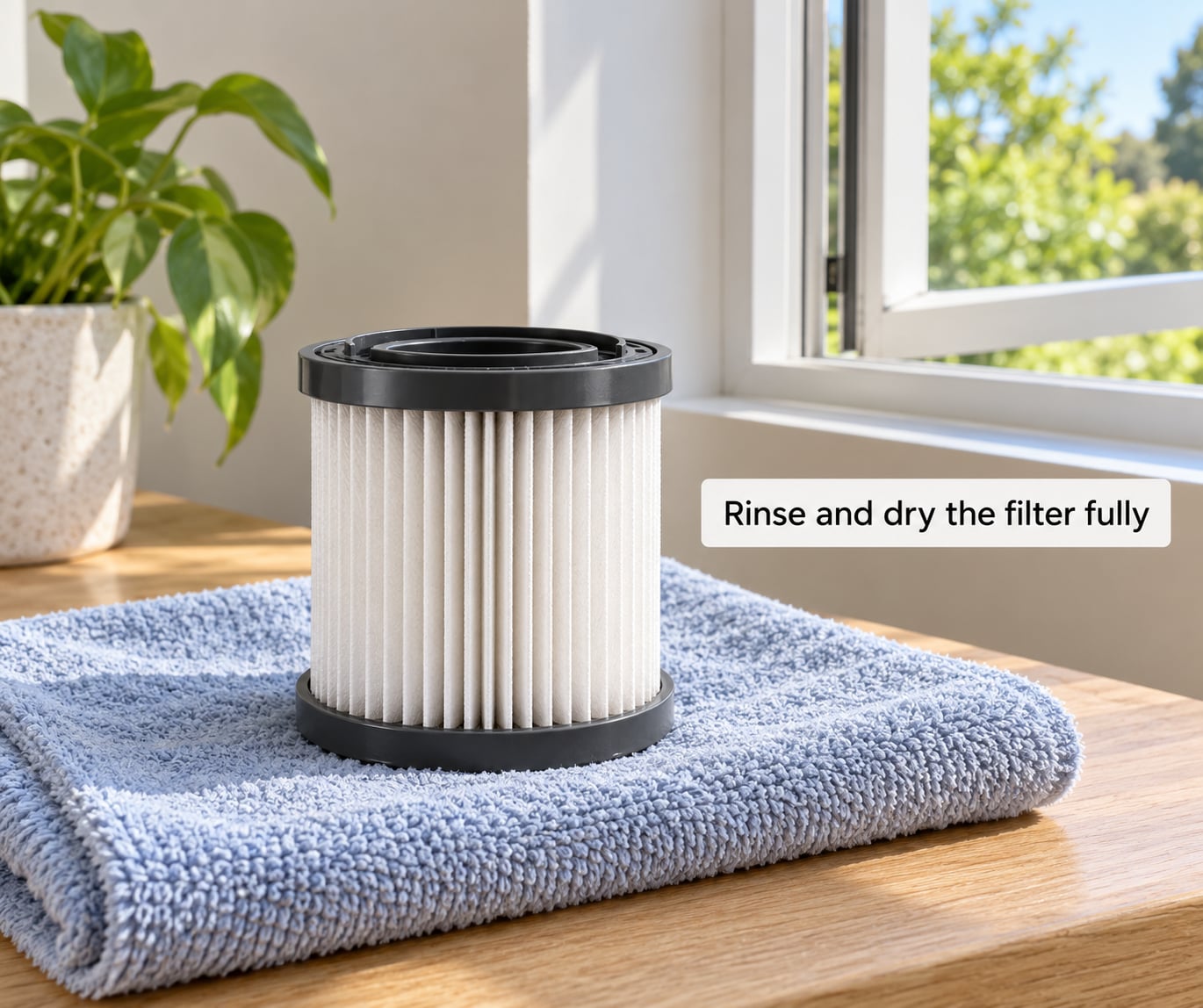
Rinse the filter until no detergent smell or film remains. Press the water out gently between your palms, without twisting, and set the filter upright on a towel where air moves around it.
Give it at least 24 hours. Many manufacturers, Dreame included, quote a wash cycle every three to four months with a minimum 24-hour dry time, and that number exists because filters genuinely stay damp inside for a day even when the surface feels dry after an hour.
To check properly, hold the filter up to a window and look into the pleats and any foam layer. They should look the same colour all the way in. Press a dry tissue into the deepest fold and inspect it for a damp mark. If there is any mark at all, it is not finished.
Heat is not a shortcut. A hair dryer, a radiator and a warm oven all shrink and distort the sealing rubber and the media, and a warped frame will not seat properly in the housing, which leaks air and does nothing for suction.
Compressed air is the other tempting shortcut and it fails the same way. High-pressure air drives fine dust further into the media and can tear the pleats, so the filter is cleaner-looking and no more breathable than before.
5. Reinstall and check performance
With the filter dry and cool, refit it in the reverse order of removal, following the arrows or the locking twist. Press until it seats properly; a filter that clips back without a firm click is often sitting a millimetre off and will not seal.
Empty the dust bin while you are there. A full bin restricts airflow on its own, and cleaning the filter with a full bin in place makes the test meaningless.
Run the vacuum for a minute on hard flooring and listen. Steady motor pitch and full suction at the head means the airflow route is clear.
Weak suction that survives a clean filter usually lives somewhere else, and the order of suspicion is worth knowing: the cyclone assembly, where bagless vacuums quietly compact dust into a solid ring; the wand; the floor head and roller brush, if hair is wrapped around it; then the hose. Check the cyclone first. Owners of bagless sticks report over and over that the compacted layer in the cylinder, not the filter, is what flattened their suction.
Common Mistakes
Each of these is easy to make and awkward to undo.
Washing a filter that is dry-clean only. Some fine dust filters and sealed HEPA cartridges are damaged by water, and some brands treat washing an unmarked filter as user error. Check the manual before the filter goes anywhere near a tap.
Using hot water, bleach or dish soap because nothing said otherwise. Cool or lukewarm water with no detergent unless the manufacturer permits it is the safe default. If in doubt, clean it dry.
Squeezing and twisting the filter to dry it faster. It works, and it bends the frame and tears the seal. Press the water out instead, and accept the wait.
Refitting a damp filter. A damp filter blocks airflow, the motor runs hot, and you can get an unpleasant smell or a cut-out on the next use. This is the single most avoidable mistake on the list.
Cleaning only the surface you can see. Dust packs into the frame, the sealing edge and any foam layer, and the pleats hold the finest particles. Dry dust hidden there is the reason a vacuum still performs badly after a quick brush.
Running the vacuum with the filter out. Even briefly, it pulls dust straight towards the motor and the fan. If you want to clear a blockage with airflow, use a hose and stop as soon as you can see through it.
Ignoring model-specific instructions in favour of generic advice. Miele’s Triflex fine dust filter is dry-cleaned and the manufacturer warns that brushing or cleaning inside it reduces its effectiveness. That is the opposite of what is safe for a washable cartridge on another brand.
Leaving the second filter behind. Many sticks have a pre-filter plus an exhaust filter, and Shark Lift Away models often have two. The one you leave dirty will undo the job you just did on the other one.
Two habits keep filters cleaner between services. Empty the bin before it is full rather than after, and store the vacuum upright with the bin removed and rinsed, so damp debris is not sitting against the filter every night. In homes with heavy pet shedding, expect to check the filter every few weeks and wash it on the three to four month cycle that most manufacturers quote.
Frequently Asked Questions
Can I wash every cordless vacuum filter?
No. Some are washable, others are dry-clean only and a few are meant to be replaced rather than washed. Check the filter label and the model manual before any water, detergent or dishwasher gets involved. Sealed true HEPA cartridges and many fine dust filters will be ruined by rinsing, and washing one can create a motor moisture problem rather than a cleaning problem.
How often should I clean a cordless vacuum filter?
Clean it when you notice reduced suction, visible dust build-up, unusual noise or a musty smell, rather than on a fixed calendar. As a guide, most manufacturers quote a wash cycle every three to four months for normal household use. Pet owners often need to inspect more often and wash more frequently. Checking airflow monthly costs a few seconds and catches a blocked filter early.
How long does a vacuum filter take to dry?
At least 24 hours, and longer in humid conditions or with a thick foam layer. The surface can feel dry after an hour while the pleats and inner frame are still damp. Hold the filter to a window and look into the deepest folds, then press a dry tissue into them. Any damp mark means it needs more time before it goes back in the vacuum.
Can I use soap or detergent to clean a cordless vacuum filter?
Only where the manufacturer says the filter is washable and recommends a cleaner. A drop of mild detergent is fine then. Avoid bleach, solvents, harsh cleaners and ordinary dish soap, which leaves a film that attracts dust faster than before. Rinse thoroughly with cool water until nothing smells of soap and the water runs clear.
Is a HEPA filter washable?
It depends which one you mean. A true HEPA cartridge is sealed fine media and water collapses it, so it is dry-cleaned and replaced once loaded. A HEPA-style washable filter is built to survive rinsing, and the manual will say so. Check the labelling on the filter itself, because the two are often sold under similar names and only one of them survives a wash.
Why does my cordless vacuum still lose suction after I clean the filter?
Because the filter was not the only blockage. Check the cyclone assembly first, since bagless vacuums compact dust into a solid ring that kills airflow without looking dirty. Then inspect the wand and hose for a blockage, and cut hair off the roller brush. If suction drops again within days in a pet household, the design is overloading faster than any filter can cope.
Conclusion
Start with the manual. Identify the filter as washable, dry-clean only or replace-only, switch the vacuum off and remove the battery, then tap and brush out the dust. Wash it only if the manual permits, press the water out without twisting, and give it a full 24 hours in a ventilated spot before refitting.
If suction has not improved after that, stop cleaning the filter and check the cyclone, the wand and the roller brush instead. A blockage in the airflow route looks like a filter problem more often than you would expect, and cleaning a clean filter will never fix it.