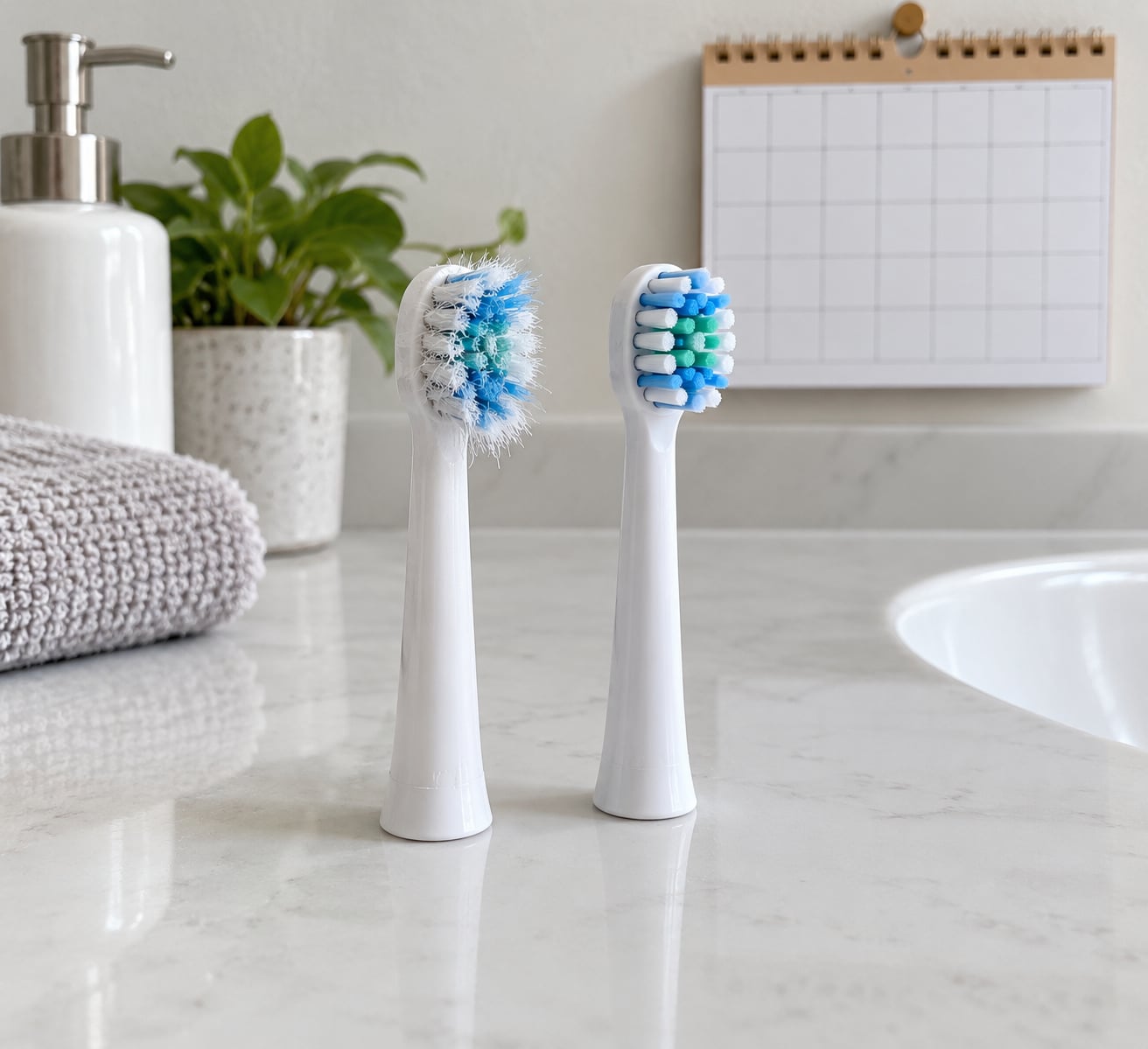
Most electric toothbrush owners should swap the head every three months, and the American Dental Association gives a range of three to four months. Replace it sooner if the bristles look frayed or bent. The instructions printed in your brush manual always come first, and no head should be used past the point where it stops working.
I have kept a mental note of replacement dates for years and the same thing happens every time: the head I am most careful with is the one that quietly expires. Written down, a three-month rhythm is easy. Left to memory, most brushes run six months or more.
Table of Contents
How Often Should You Replace an Electric Toothbrush Head?
The three-month figure is a benchmark, not a medical rule, and the reason it recurs is mechanical. Every session bends the bristle tufts, and after roughly three months of normal use they no longer spring back to their original shape. A head past that point looks clean but removes measurably less plaque.
The ADA advises replacing electric toothbrush heads every three to four months, and the NHS gives the same three-month guidance for manual brushes. Brand manuals land in the same place. What moves the number is your habits rather than the label.
Why three months keeps coming up
Bristle wear is gradual and invisible from across the bathroom. You notice a splayed tuft long after the cleaning performance has dropped, which is why a date beats a visual check alone. Write the day you fit a new head on the bathroom door or add it to your phone calendar, then treat that as the plan.
When three months is too long
Brush twice a day and a head may be finished in closer to ten weeks. Scrubbing hard, grinding, coffee and smoking all shorten the life of a head, as does a storage spot that stays damp. People who brush three times a day or use an abrasive whitening paste usually need a fresh head sooner than the printed guidance suggests.
When stretching is reasonable
If you brush gently once or twice a day, bristles are straight and evenly coloured, and the handle still holds the head tightly, running a few weeks past three months is not a problem for most adults. Six months and beyond is a different matter, and it is common enough that people ask about it directly.
What Signs Mean It Is Time for a New Brush Head?
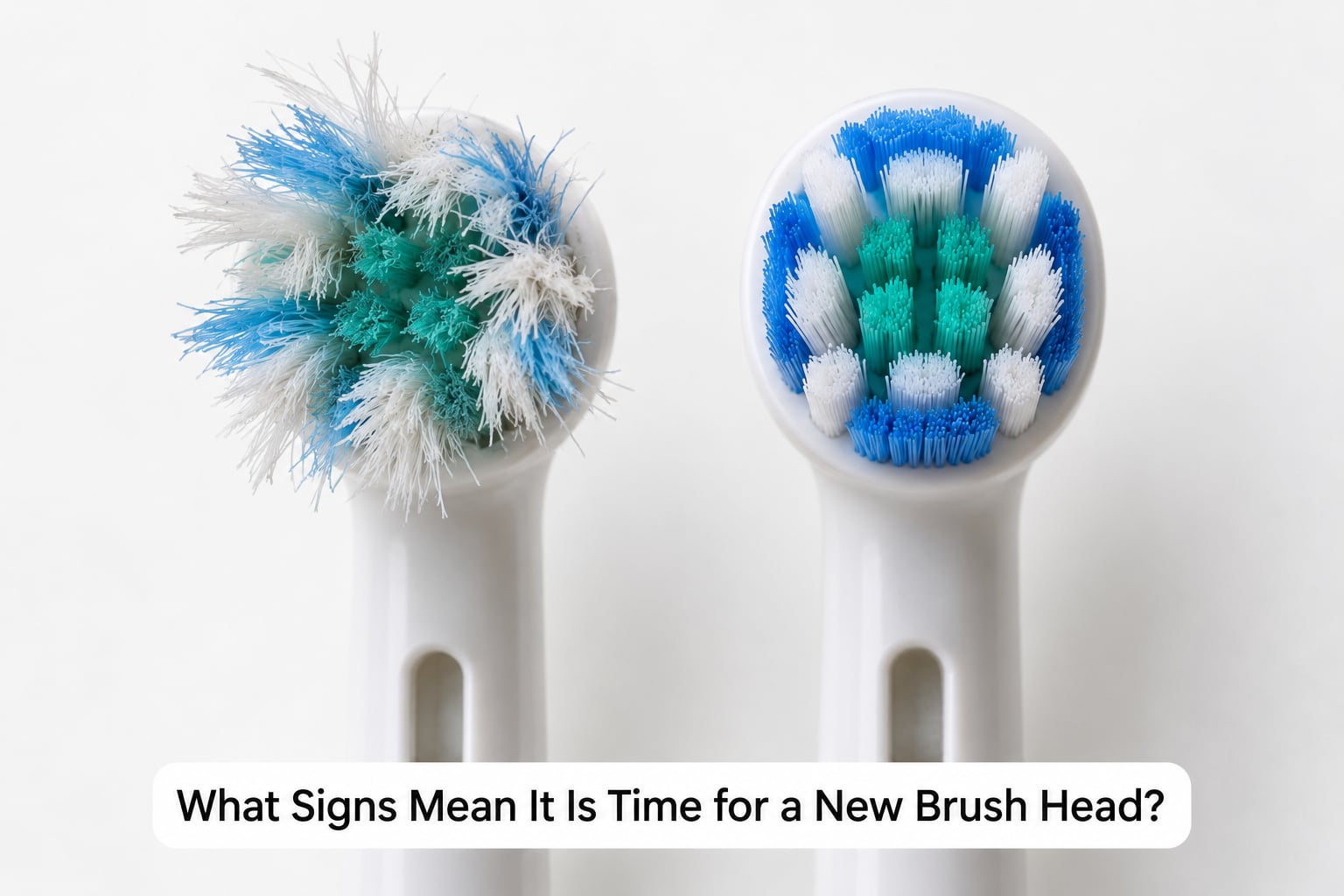
Run your thumb along the bristle edge once a month. It takes ten seconds and it catches most problems before your gums do. One thing wear cannot fix: if gums bleed on every brushing session, or a tooth feels loose or sensitive to cold, book a dental appointment rather than changing heads.
- Frayed bristles: the tips look split or fuzzy rather than blunt and rounded.
- Splayed bristles: the tufts lean away from each other and no longer form an even edge.
- Bent or missing tufts: gaps open up where the bristles used to sit tightly.
- Faded indicator bristles: the coloured ring has lost most of its colour, which is the signal it was designed to give.
- Discolouration and stuck-on particles: staining builds at the base of the bristles and will not rinse away.
- A loose head: the collar no longer clicks tight on the handle, so the head wobbles or sits proud.
- A weaker clean: your teeth feel less smooth afterwards than they used to at the same two minutes.
- A recent illness: a head used while you were unwell goes in the bin regardless of its age.
How to tell frayed from splayed
Splayed means the tufts have bent outward and the brush has lost its edge. Frayed means the tip of an individual bristle has split, usually from scrubbing too hard. Splaying is normal ageing; fraying usually means the pressure is too high and the replacement will fray again quickly.
Replacement Schedules by Toothbrush Type and User Needs
Different heads wear at different rates, so treat the table as a starting point and adjust it by what you see.
| Head type or situation | Typical interval | Why |
|---|---|---|
| Standard oscillating-rotating head | 3 months | The default the ADA and NHS intervals assume |
| Round or small head | 3 months, check at 10 weeks | Reaches fewer surfaces in one session |
| Sonic head | 3 to 4 months | Side-to-side motion relies on upright bristle ends |
| Silicone-bristle head | 3 to 4 months | Moulded bristles shed water and dry faster than nylon |
| Soft head for sensitive or bleeding gums | 3 months, sooner if gums react | Worn soft bristles scratch more rather than less |
| Braces, crowns or implants | 3 months or sooner | Contact with metal and glue wears tips quickly |
| Brushing three or more times daily | About 10 weeks | Three times the wear per calendar month |
How to Make Electric Toothbrush Heads Last Longer
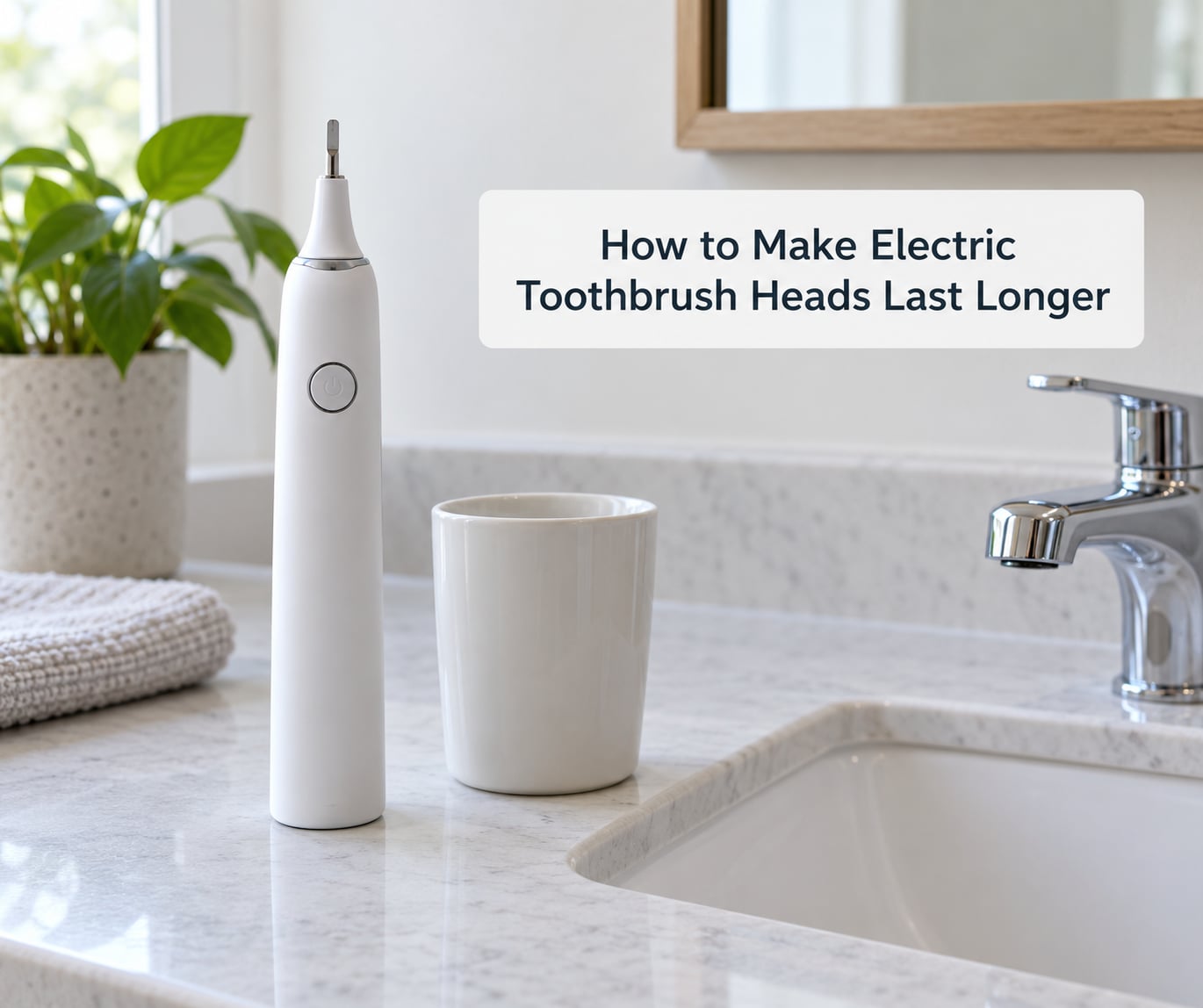
Most worn-out heads were killed by storage, not by brushing. A head sitting in a closed cup or capped travel case stays damp, which is exactly what bristle tufts need to stay soft and springy.
- Rinse under the tap after every session and shake off the water rather than wiping the bristles.
- Store upright on the handle with nothing touching the bristle head.
- Never close a head away while it is wet. If you travel, use a vented case.
- Let the brush dry on the charger if the charger allows it, and wipe the base of the handle.
- Brush gently. Hold the handle lightly and guide it across the teeth instead of scrubbing.
- Keep heads separate. Never share a head, even within a household.
- Never modify the brush or immerse the whole handle in water. Only the head goes under the tap.
None of this matters once a head is past its date. If you are still guessing, the simple answer to how often to replace an electric toothbrush head is the one on your manual, three months as the working default.
Frequently Asked Questions
Can I keep the same electric toothbrush head for two years?
Two years on one head is well past any dental guidance, and most adults notice the drop in cleaning before then. Bristle tufts lose their spring long before the plastic body gives up. Replace on the schedule your manual lists and check the bristles monthly.
Do electric and manual toothbrushes follow the same replacement schedule?
Yes, broadly. The ADA and NHS both give three to four months for manual brushes and three to four months for electric heads, because the interval is driven by bristle wear rather than by the motor. Heads on electric brushes often wear a little faster because of the stiffening frame.
Should I replace the head after being sick?
Most dental professionals advise replacing it, and a new head costs very little next to a course of any prescribed medicine. A head used through an illness harbours what damp bristles and a wet neck harbour. The handle itself can usually be wiped down and kept unless it is damaged.
How do I pick a replacement head that fits my brush?
Match the model number printed on the old head or on the base of the handle, not the brand name alone. A head from a different brand may look identical and still fit loosely, and a loose head loses the vibration pattern the handle is designed to deliver. Soft bristles suit most people.
Is buying replacement heads in bulk worth it?
It is practical if you lose track of dates, since a bulk pack of four or eight covers a year or two and stops the gap that pushes people past six months. Keep heads dry in the original packaging, note the fitment model, and write a fresh date on the pack the day you open it.
Conclusion
Start with the manual that came with your brush, then set a three-month reminder so the question stops coming up every few weeks. Between reminders, run a thumb along the bristle edge once a month and replace straight away when bristles splay, indicator colour fades or the head stops clicking tight. That habit costs four heads a year and keeps the cleaning power where it started.
Last reviewed in 2026.